
Cohabitation laws in the UK: your rights today and what's proposed


In England and Wales, living together does not give you the legal rights that marriage does, and the government's 2026 proposals to change that are not law yet. This guide is for couples who live together, or plan to, without being married or in a civil partnership.
The government is consulting on new laws for cohabiting couples in England and Wales. This is a consultation, not a law. Nothing has changed and no new rights exist yet. Even if you have lived together for many years, you have very few automatic rights today under the current legal framework. The good news is you don't have to wait for the law to catch up. amicable helps couples get clear together now, on your own terms.
If you live with your partner and you've seen the headlines about new cohabitation rights for unmarried couples, you might be wondering where you stand. It's a fair question, and lots of people are asking it right now.
More than 3.5 million couples live together without marrying in England and Wales, and that number keeps rising. So here's the plain-English version: what the law gives you today, what's being proposed, and the simple steps you can take to feel settled, whatever happens next.
What rights do you have if you live together today?
Cohabitation is the legal term for living together as a couple without being married or in a civil partnership. In England and Wales it gives you very few automatic rights, however long you've been together.
| Area | What unmarried couples can expect |
|---|---|
| Your home | No automatic right to a share of a home your partner owns. If you own together, your share depends on how you hold it and what you agreed |
| Savings, pensions and investments | No automatic claim on each other's money |
| Financial support after a split | No legal duty to support an ex-partner, though child maintenance may be due if you have children |
| Children | Decisions about children are based on their best interests, whether or not you're married |
| If your partner dies without a will | No automatic right to inherit |
| Ending the relationship | No divorce needed, but a separation agreement can record how you split your money |
For a fuller walkthrough, read our guide to your legal rights when separating if you're unmarried or our guide to ending a cohabitation relationship.
Is common law marriage a real thing in England and Wales?
No, there's no such thing as common law marriage in England and Wales, no matter how long you've lived together. Even so, almost half of people (47%) believe it exists, according to government research cited in its consultation (British Social Attitudes).
This belief leads many couples to assume they have rights they don't have. Today, living together doesn't give you the financial or inheritance rights that marriage does. Our common law marriage myths guide goes through the most common misunderstandings.
What happens to your home if you're not married?
Ownership decides where you stand, not how long you've lived there. If the home is in your partner's sole name, you have very limited rights to stay or to claim a share. You can only claim an interest if you can show you contributed, for example to the deposit, the mortgage or major building work, on the understanding that you'd own part of it.
If you own the home together, the way you hold it shapes what each of you gets. Joint tenants own the property as one, so it passes to the survivor if one of you dies. Tenants in common own defined shares, and each share passes under that person's will or the intestacy rules. Our guide to tenants in common vs joint tenants sets out the difference.
When couples disagree and nothing is in writing, courts use trust law, mainly the Trusts of Land and Appointment of Trustees Act 1996 (TOLATA), to work out who owns what. The court has to reconstruct what you each intended, which is slow and costly. A deed of trust, also called a declaration of trust, records each person's share when you buy and avoids that. If you're about to buy, our guide to buying your first home together is a good place to start.
What happens if your partner dies without a will?
Unmarried partners have no automatic entitlement under the intestacy rules, which decide who inherits when someone dies without a will. That is the case however long the relationship lasted, and close family members come first.
A surviving partner can bring a claim under the Inheritance (Provision for Family and Dependants) Act 1975, but claims take time and money and usually arrive during bereavement. A will lets you decide who inherits, which the intestacy rules would not do for an unmarried partner. Our guide covers what happens to the home when an unmarried partner dies.
What's changing for couples who live together?
For now, nothing has changed. In June 2026 the Ministry of Justice opened a consultation called 'A fairer end to relationships'. A consultation is the government asking for views, not a new law.
The proposals would give some couples who live together a basic, needs-based set of financial rights when a relationship ends. Couples could opt out if they both agree. There would be no automatic 50:50 split, and the proposed rights are narrower than the rules for married couples. The consultation closed on 14 August 2026.
Who would the proposed new rules apply to?
Not everyone, and not straight away. As proposed, the new rights would apply automatically to couples who've lived together for at least three years, or who live together and have a child.
Because the framework is opt-out, eligible couples would be covered by default but could agree their own arrangement instead. On death, qualifying couples could also gain inheritance rights similar to a spouse where a partner dies without a will.
When could this become law?
Not for a while. The government has said any change would only happen once parliamentary time allows, and there's no timetable. Realistically this could be years away, and the proposals could change along the way. Anyone whose relationship ends before a new law starts would not benefit from it, so the current rules apply until then.
Couples still don't have the rights that many assume they do, which is why it makes sense to get clear now together.
Do the same rules apply in Scotland and Northern Ireland?
No. The consultation covers England and Wales only. Scotland has its own law: under the Family Law (Scotland) Act 2006, cohabiting partners can make limited financial claims when a relationship ends or a partner dies. Northern Ireland has separate rules again. This guide, and amicable's service, is for couples in England and Wales.
What can you do now to feel clear and settled?
Have a conversation with your partner, and put what you agree in writing. You don't need the law to change to get on the same page about your home, your money and your shared life.
A good place to start is a Living Together Planning Session: a guided, one-hour conversation where you talk through the big things together and leave with a plan. Our guide to conversations to have before moving in together shows what couples usually cover. If you'd like it in writing, a cohabitation agreement records what you've agreed as a couple, on your own terms.
Two more steps cover the situations where the law is least forgiving:
- Own or buying a home together: a deed of trust records each person's share.
- Want your partner to inherit: a will lets you decide who gets what, which the intestacy rules would not do for an unmarried partner.
Plenty of couples sort this out when they move in together or buy a home together.
Living together today vs what's being proposed
| Living together today | What's being proposed | |
|---|---|---|
| Common law marriage | Doesn't exist in England and Wales | Not affected; the consultation aims to address this myth |
| If a relationship ends | No automatic rights | Needs-based provision for eligible couples, with an opt-out |
| If a partner dies without a will | No automatic right to inherit | Inheritance rights similar to a spouse for qualifying couples |
| Who it would cover | n/a | Lived together three or more years, or living together with a child |
| Status | Current law | Consultation only, not yet law |
Key takeaways
- There's no such thing as common law marriage in England and Wales, however long you live together.
- Unmarried partners have no automatic right to a home their partner owns, or to inherit without a will.
- The June 2026 government consultation is a proposal, not a law. Nothing has changed yet.
- Any new rights would apply to couples living together for three or more years, or with a child, on an opt-out basis.
- There would be no automatic 50:50 split, and the rules would be narrower than for married couples.
- Change is likely years away, so the rights people assume they have still don't exist today.
- You can get clear together now with a conversation and, if you want it, a written agreement.
Frequently asked questions about cohabitation laws in the UK
Do cohabiting couples have any legal rights in the UK?
Very few. In England and Wales, unmarried couples have no automatic right to each other's property, savings or pensions, no automatic right to inherit and no duty to support each other after a split, however long they've lived together. Parents can still owe child maintenance. Scotland has some limited rights for cohabiting partners under its own law.
Is common law marriage real in England and Wales?
No. There's no legal status of common law marriage in England and Wales, no matter how long you've lived together or whether you have children.
Do I have rights to my partner's home if we're not married?
Not automatically. If the home is in your partner's sole name, you'll usually only have a claim if you can show you contributed to the deposit, the mortgage or major work on the house, with the understanding that you'd own a share. A deed of trust records each person's share if you own a home together.
Has the law for cohabiting couples changed?
No. The government has opened a consultation called 'A fairer end to relationships', which is a request for views, not a new law.
When will the new cohabitation law come in?
There's no timetable. The government has said that cohabitation law changes will be made when parliamentary time allows, so change is likely years away.
What would the new law mean for unmarried couples?
You'd get some basic financial rights by default. These would include needs-based support if the relationship ended, plus inheritance if a partner died without a will. They'd apply once you'd lived together for three years, or if you live together and have a child. However, you could opt out together if you'd rather. None of this is law yet, it's still a consultation.
Is it worth making a cohabitation agreement if the law might change?
Yes. No new law is in force and reform could take years. A cohabitation agreement records what you've both agreed today, and it should stay useful as a record of your intentions whatever the law later says. Our guide explains whether cohabitation agreements are legally binding.
Does the new cohabitation law apply in Scotland?
No. The consultation covers England and Wales only. Scotland already gives cohabiting partners limited rights under the Family Law (Scotland) Act 2006, and Northern Ireland has its own rules.
What can we do now while the law catches up?
Have the conversation and, if you'd like, put it in writing. A Living Together Planning Session or a cohabitation agreement lets you agree what's fair on your own terms, today.
Is amicable a law firm?
No. amicable is a relationships and money service in England and Wales. We help couples have better conversations and make clear, fair decisions together.
Get clear together
Want to feel clear and settled, whatever happens with the law? Book a free 15-minute advice consultation and we'll talk through where you stand and what would help.

Your guide to a kinder divorce
What if divorce didn’t have to be a battle?
In amicable divorce, Kate Daly offers compassionate, practical guidance to help you separate in a kinder, better way. Whether you’re just beginning, working through the practicalities or adjusting to co-parenting, this book meets you exactly where you are - and helps you move forward with confidence.
Order on Amazon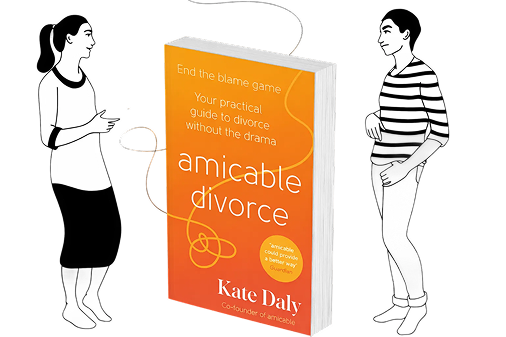
Comments (0)