
What is a cohabitation agreement and when would you need one?


What is a cohabitation agreement and do you need one?
A cohabitation agreement, also called a living together agreement, is a written agreement that sets out who owns what, who pays for what and what happens if you separate. It's most useful for unmarried couples, because in England and Wales you don't get automatic rights to each other's property or money, however long you've lived together.
You can make one at any stage, whether you're about to move in or have shared a home for years. This guide explains what goes in one, who should think about getting one, whether it's legally binding and what it costs.
What is a cohabitation agreement?
A cohabitation agreement records the arrangements between people who live together. Most are made by couples, but one can cover more than two people if they all share a home.
It's a practical document. It says how you'll handle money and the home while you live together, and what you've agreed will happen if you stop. Having it in writing means you both know where you stand, and you don't have to rely on memory if things change.
What's included in a cohabitation agreement?
Every agreement is different, but most record:
- Money and bills: who pays the rent, mortgage and household bills, and in what shares
- The home: who owns it, or what each of you put towards the deposit
- Belongings: who owns items such as cars, furniture, art and pets
- Responsibilities and rights: day-to-day responsibilities and each person's right to live in the home
- Debts, savings and inheritance: how you'll handle joint loans, savings and any future gifts or inheritance
- If you separate: what happens to the home, belongings and money if you stop living together
Do you need a cohabitation agreement?
Not everyone does. Cohabitation agreements are normally for couples who choose not to marry or enter a civil partnership, and for people who combine their finances to buy a home. If any of these situations sound familiar, it's worth thinking about one:
| Your situation | How an agreement can help |
|---|---|
| Buying a home together | Records what each of you put towards the deposit and how the money is split if you sell |
| One of you owns the home and the other moves in | Records the owner's share, and what the other person pays in or gets back |
| Renting together | Sets out how you split rent and bills, who the tenancy deposit belongs to and who keeps shared items |
| Moving in after a divorce or earlier relationship | Keeps savings, property and inheritance separate where you both want that |
| One of you earns or contributes more | Records the split you've agreed, so it feels fair to you both |
| Already living together | Records what you've each put in so far and what you want to happen next |
You can make a cohabitation agreement whether you rent, co-own or one of you owns the home. If you're getting married instead, a prenuptial agreement does a similar job.
Not sure you need a full agreement? Our Living Together Planning Session is a 60-minute conversation with a Specialist to help you plan how you'll live together.
When should you review it?
Keeping the agreement up to date counts for more than when you first make it. Buying a property, having children, getting an inheritance or any big change in your finances is a good time to look at it again. Our guide to when to update a cohabitation agreement explains what to check.
Is a cohabitation agreement legally binding?
Yes, it can be. A cohabitation agreement is a contract, and courts in England and Wales are more likely to uphold it if it was made properly. A strong agreement is usually:
- Signed as a deed: both of you sign it, with witnesses
- Based on full disclosure: you've each been open about your finances
- Freely agreed: neither of you was pressured into it
- Clear and up to date: its terms are clear and it's reviewed when life changes
No agreement can bind a court on arrangements for children. The court always looks at what's best for the child, and child maintenance follows its own rules. Read more in our guide: are cohabitation agreements legally binding?
Because a poorly drafted agreement can be challenged, it's best to have a legal professional draft yours. Our cohabitation agreement service takes you both through it step by step.
How much does a cohabitation agreement cost?
The cost depends on who drafts it and how complicated your situation is. amicable's cohabitation agreement service is a fixed fee of £800 including VAT for the two of you, or £400 each. If you'd like to talk things through first, you can add a Living Together Planning Session for £210.
See what's included and how it works before you decide.
What are the benefits of a cohabitation agreement?
The main benefit is financial security and peace of mind, especially if one or both of you own the home. If you rent, an agreement can still help you manage disagreements later.
- Clarity on contributions: it sets out how each of you pays towards rent, mortgage payments, bills and maintenance
- Protection for what you own: if one of you owns the home or has put in more, it records ownership and how assets will be split if the home is sold
- Certainty if you separate: unlike married couples and civil partners, cohabiting partners don't have automatic legal rights to each other's property, so an agreement makes sure you both understand your rights and responsibilities
- Fewer disagreements: a written agreement can head off arguments about money, property and belongings, which makes separation less stressful and cheaper
- Joint debts: if one of you takes on more of a joint mortgage or loan, the agreement can say how that's handled
- Inheritance: it doesn't replace a will, but it can clarify financial arrangements and help prevent inheritance disagreements
What happens if you disagree?
Property
Without an agreement, couples can spend a lot on legal proceedings to decide their shares in a property that they co-own, or that one of them owns but the other helped pay for. With an agreement, these disagreements are often simpler and cheaper to settle, because your intentions are on paper.
Children
It's always better to settle arrangements for children outside court. The court will only make an order if it's in the child's best interests. Most parents record what they've agreed in a parenting plan, or get professional help if they're struggling to agree.
You can also apply to the Child Maintenance Service for child support after separation. If the parent who doesn't live with the children doesn't pay as expected, the court can take that into account when deciding how much of the home each person owns.
If you're already separating, our guide to ending a cohabitation relationship is a good next step, and you can read about proposed changes to the law.
Cohabitation agreement FAQs
Do I need a cohabitation agreement if we're just renting together?
Yes, it can still be useful. Even without a shared property, an agreement can cover how you split costs, what happens to shared belongings and what you'd each take with you if you separated. The less you own together, the simpler the agreement, but it's still worth having a clear record.
Can we write a cohabitation agreement ourselves?
You can set out what you want to agree between yourselves. But for the agreement to have the best chance of being enforceable, it should be drafted properly, with both of you disclosing your financial positions fully and both entering into it freely. amicable's Specialists draft it based on what you tell them, which means it reflects your actual situation rather than a generic template.
What happens if we separate and we have a cohabitation agreement?
The agreement sets out what you both agreed when things were good. If you separate, it gives both of you a clear starting point rather than having to establish your positions from scratch. amicable can also help if you need to work through a separation as a couple.
Does a cohabitation agreement cover children?
Financial arrangements for children are dealt with separately under family law and aren't typically included in a cohabitation agreement. If you have children together, it's worth getting specific advice on parenting and financial arrangements.
Do common law spouses need a cohabitation agreement?
There's no such thing as a common law spouse in England and Wales, however long you've lived together, but the term is often used for unmarried couples who share a home. Nobody has to have a cohabitation agreement. Without one, though, you have no automatic rights to each other's property, so it's worth thinking about. Read more about the common law marriage myth.
Are common law spouses entitled to each other's assets after cohabitation ends?
Not automatically. Unmarried partners don't have the same claim on each other's assets as married couples or civil partners. What you're entitled to depends mainly on who owns what and what you've agreed. A cohabitation agreement can record that, including any support you agree to give each other, but the law doesn't guarantee it.
What's the difference between a cohabitation agreement and a declaration of trust?
A declaration of trust, also called a deed of trust, is a legal document that records who owns what share of a property and how the money is split if it's sold. A cohabitation agreement is wider. It covers the home, but also bills, savings, debts, belongings and what happens if you separate. Some couples have both. See deed of trust vs cohabitation agreement for a full comparison.
What's the difference between a cohabitation agreement and a prenuptial agreement?
A cohabitation agreement is for couples who live together without being married or in a civil partnership. A prenuptial agreement is for couples who are about to marry or enter a civil partnership. Both give you clarity about money and property if you separate. Courts can give a fair, properly made prenup real weight, but it isn't automatically binding.
Can we make a cohabitation agreement after we've moved in?
Yes. You can make one at any stage, whether you're just moving in or have lived together for years.
Can a cohabitation agreement cover more than two people?
Yes, if you all live together.
Thinking about getting one?
Talk to an amicable Specialist about whether a cohabitation agreement is right for you. We work with couples together, so you both get the same support. Book a free 15-minute consultation.

Read More

This blog explains how you can protect yourself as a couple if you live together but aren’t married.

If you're buying a home together, you've probably come across both a deed of trust and a cohabitation agreement. You might be wondering which one you actually need. It's a fair question, and the honest answer is that they're not rivals.

If you've lived with your partner for years, you might assume you've built up some legal status as a couple. It's a very common belief for couples living in England and Wales, with almost half of people (47%) thinking 'common law marriage' gives them rights.

Support for co-habiting couples
Speak to an experienced Separation Specialist to understand your options. We help couples with all the legal, financial and family aspects of separation.
Book a free 15-minute consultationYour guide to a kinder divorce
What if divorce didn’t have to be a battle?
In amicable divorce, Kate Daly offers compassionate, practical guidance to help you separate in a kinder, better way. Whether you’re just beginning, working through the practicalities or adjusting to co-parenting, this book meets you exactly where you are - and helps you move forward with confidence.
Order on Amazon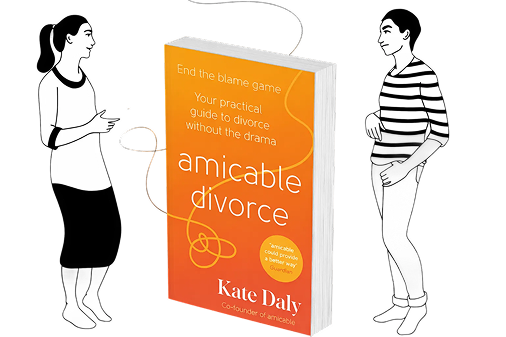
Comments (0)