
When life changes the balance: staying fair after a big change


| When life changes the financial balance in your relationship, the fairest step is to talk about what has changed and what still feels right for you both. That might be a promotion, inheritance, career break, time away from work or one person taking on more at home. If the change affects money, property or shared plans, you may later decide to record what you've agreed in a cohabitation agreement. amicable helps couples have that conversation calmly, so the change becomes something you work through together. |
|---|
You may have been living together for years with a financial arrangement, perhaps an unspoken one, that worked. Then something changes.
Maybe one of you has had a promotion. Maybe one of you is taking time out of work. Maybe family money has arrived, or one of you is doing more unpaid work at home.
Nobody has done anything wrong. But the old arrangement may no longer fit the life you're living now.
This guide explains how to talk about money when the balance changes, what fairness can look like over time and when it may help to put your updated agreement in writing.
Why can a once-fair arrangement stop feeling fair?
A once-fair arrangement can stop feeling fair because life changes. The split you agreed two years ago may not match your income, time, responsibilities or family plans now.
That doesn't mean the original agreement was wrong. It means it may need updating.
Couples often keep following the same pattern because it feels simpler than reopening the conversation. But if one person is quietly carrying more, earning less, paying more or doing more at home, assumptions can build.
The aim isn't to make everything perfectly equal. It's to make sure the arrangement still feels fair to both of you.
What changes should prompt a money conversation?
Any big change in income, work, family money or home responsibilities is a good reason to pause. You don't need a crisis to review how things work.
The best time to talk is often when the change is still new. That way, you can agree what it means before a temporary arrangement becomes the default.
Common triggers include:
- one of you getting a promotion or earning significantly more
- one of you reducing hours, retraining or taking a career break
- time away from work changing who earns and who does more at home
- an inheritance, gift or family contribution entering the relationship
- one of you paying more towards the home or shared costs
- one person taking on more caring responsibilities
- a health issue changing work, income or daily life
These changes are normal. The important question is whether the old arrangement still fits.
Does earning less mean contributing less?
No. Earning less doesn't automatically mean contributing less to the relationship. Money is only one part of a shared life.
One person may earn less because they're doing more childcare, caring for a relative, managing the home, supporting a career change or handling more of the planning and organising that keeps life moving. Those contributions matter too.
This is especially important for established couples. You may have built a system together where one person earns more and the other carries more of the unpaid work that keeps home life running.
A fair conversation should look at the whole picture. Paid work matters, but so does childcare, caring, household work and the planning that keeps life moving. It's also worth noticing who has less time, energy or flexibility because of the way your life is currently set up.
How do you talk about an income change without making it awkward?
Start with the change, not the blame. That keeps the conversation practical and collaborative.
You might say: 'Our money situation has changed since we first agreed this. Can we talk through what feels fair now?'
That framing helps because it makes the conversation about the arrangement, not the person. You aren't accusing each other. You're updating something together.
Three questions can guide the conversation:
- What has changed?
- What still feels fair?
- What needs updating?
Try not to solve everything in one sitting. Start with the areas that affect daily life most, such as bills, savings, childcare, mortgage payments or personal spending money.
What if one of you now earns much more?
If one person's income has increased, the old 50:50 split may start to feel different. That doesn't mean every couple needs to split costs by income. It means the arrangement deserves another look, together.
Some couples keep equal payments because both people prefer it. Others move to a proportional split, where each person contributes according to what they earn. Some agree that one person pays more towards certain costs, while the other contributes in different ways.
There is no single right answer. What matters is that the arrangement feels agreed, not accidental.
It can help to look at the costs that shape everyday life first: rent or mortgage payments, household bills, savings and bigger purchases. You might also talk about personal spending money, especially if one person feels stretched while the other has more flexibility.
What if one of you takes a career break?
A career break is rarely just one person's choice. It often supports something the couple or family needs, such as childcare, study, health, caring responsibilities or a change in family routine.
That means the financial plan should feel shared too. If one person earns less or stops earning for a while, talk together about how everyday costs will be covered and how the person taking the break is contributing in other ways.
It's worth agreeing how long the break is expected to last, how you'll use savings and whether anything needs to change around pensions or long-term savings. You may also want to talk about unpaid work at home, especially if one person is doing more to keep daily life running.
The arrangement doesn't need to be fixed forever. What matters is that you both understand the plan now, and know when you'll review it. A written note or agreement can help because it records what you both understood at the time.
What if inheritance or family money changes the balance?
Inheritance can feel different from salary because it often comes from family history. It may be intended for one person, but still affect shared plans.
Before the money becomes part of everyday spending or a home decision, agree together how you both see it. Is this money staying separate, being used for something shared or going into the home? Each route can mean something different, so it's worth being clear before the money moves.
If inheritance or family money is going into a home, you may also need property-specific advice about how that contribution is recorded.
The relationship point is simple: talk about what the money means instead of letting assumptions simmer, unsaid.
When should you put the new arrangement in writing?
You may want to put things in writing when the change affects money, property, savings or long-term plans. This doesn't have to happen the moment something changes.
Start with the conversation. Once you broadly agree what feels fair, a written agreement can record that shared understanding.
A cohabitation agreement can record what you've agreed about money, property and practical arrangements as an unmarried couple.
That might include how household costs are shared, what stays separate and what you both treat as shared from now on. It can also record how family money is being used, how contributions to the home are recognised and when you'll review the arrangement again.
The point isn't to make the relationship feel formal. It's to keep fairness up to date as life changes.
Key takeaways
- A fair arrangement can become outdated when life changes.
- A promotion, inheritance, career break, parental leave or caring role can shift the balance.
- Earning less doesn't automatically mean contributing less.
- Money and non-money contributions both matter.
- The best conversations start with what has changed, not who is right.
- A cohabitation agreement can record what you've agreed once the conversation has happened.
Life changes worth talking through
| Change | What to talk about |
|---|---|
| Promotion or higher income | Whether your current cost split still feels fair |
| Career break | How household costs, savings and unpaid work will be handled |
| Inheritance or family money | Whether the money stays separate or becomes part of a shared plan |
| Parental leave | How income, childcare and day-to-day work will be balanced |
| Home improvements | Whether larger contributions should be recorded |
| Caring responsibilities | How time, money and practical support will be recognised |
| Unequal income | Whether equal payments still feel fair to both of you |
FAQ
Should we change how we split bills if one of us earns more?
Maybe. Some couples keep splitting bills equally. Others move to a proportional split based on income. The right answer is the one you both understand and feel comfortable with.
Does earning less mean I should contribute less?
Not always. You may be contributing in other ways, such as childcare, caring, household work, or supporting your partner's career. Those contributions should be part of the fairness conversation too.
Should we update our cohabitation agreement after a big life change?
It can be worth reviewing it after a major change, such as buying a home, receiving family money, taking parental leave, or one person paying more towards the property.
Does inheritance become shared if I use it in our relationship?
No, unless you use it to buy property or joint names or otherwise put it into joint names. If inheritance or family money goes into a shared home or joint plans, it's worth getting advice and recording what you both intend.
How do we talk about money without making it feel like a criticism?
Focus on the change, not the person. Try saying: 'Our situation has shifted. Can we talk about what feels fair now?' That keeps the conversation practical and shared.
When is the right time to write things down?
Once you've talked through what has changed and broadly agree what feels fair. The writing should record what you've agreed, not replace the discussion.
Staying fair, no matter what life throws at you
A fair arrangement isn't something you agree once and never revisit. Life changes. Work changes. Family needs change. What felt balanced before may need adjusting now.
That conversation doesn't need to be dramatic. It can be part of how you look after the relationship as it grows, together. You're simply updating the shared plan so it still fits.
amicable's Living Together Planning Session gives you a calm way to talk through what has changed and what now feels fair, before deciding whether to put anything in writing.
amicable isn't a law firm. We're relationships and money experts in England and Wales, here to help you decide together.
Book a free 15-minute advice consultation to talk through what has changed and what might help you both feel clear.

Your guide to a kinder divorce
What if divorce didn’t have to be a battle?
In amicable divorce, Kate Daly offers compassionate, practical guidance to help you separate in a kinder, better way. Whether you’re just beginning, working through the practicalities or adjusting to co-parenting, this book meets you exactly where you are - and helps you move forward with confidence.
Order on Amazon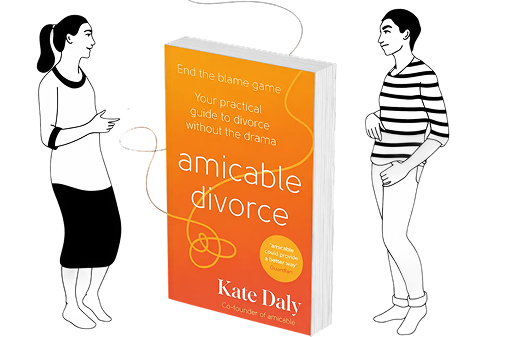
Comments (0)