
Is it legally binding? How agreements between couples actually work


| For unmarried couples in England and Wales, the two main agreements are a cohabitation agreement and a deed of trust. A cohabitation agreement is treated as a contract and carries real legal weight. A deed of trust is a legally binding property document with direct legal force over the ownership of a specific home. Neither is a court order, but both are considerably more useful than having nothing in writing. What matters most is how they're made. |
|---|
When unmarried partners make an agreement, like a cohabitation agreement or a deed of trust, there's one question almost everyone asks: "is it legally binding?"
Whether you're asking are cohabitation agreements legally binding, or whether a deed of trust holds up in court, the answer is the same: it depends on how it's made. Here's what the law in England and Wales actually says.
What makes an agreement between partners legally binding?
Before getting to specific products, it's worth understanding the principles that apply to any agreement a couple makes in England and Wales. These are the conditions courts look at. They apply whether you're making a cohabitation agreement, a deed of trust, or any other formal arrangement.
Both of you entered into it freely. An agreement made under too much pressure, or where one person felt they had no real choice, may not be enforceable at all.
Both of you understood what you were signing. If one person didn't fully understand the terms or the implications, the agreement is on weaker ground.
Both of you were honest about your finances. An agreement made where one person didn't know the full picture is more vulnerable.
The terms are fair. An agreement with heavily one-sided terms is at greater risk than one that reflects what a reasonable person would consider fair.
It was made properly. In writing and signed by both of you.
The more of these conditions your agreement meets, the stronger it is. A professionally drafted agreement, made honestly and in good faith, is in a very different position to something informal or rushed.
Is a cohabitation agreement legally binding?
A cohabitation agreement is treated as a contract in England and Wales. Put plainly, a cohabitation agreement is enforceable: courts treat it as a binding contract between you. A well-made cohabitation agreement enforceable in England and Wales gives you a clear documented record of what you both agreed.
That's different from a court order, which is imposed by a judge and directly enforced by the courts. A cohabitation agreement is made between the two of you, and if it were ever needed, a court would consider it as evidence of what you both intended and agreed. Courts in England and Wales take that seriously, particularly when the agreement was made following the principles above.
The question of whether cohabitation agreements hold up in court comes down largely to how they were made. An agreement that meets those conditions is much harder to challenge than one that doesn't, and considerably more useful than having nothing in writing at all.
Is a deed of trust legally binding?
A deed of trust is a legally binding property document with direct legal force over the ownership of a specific home, generally considered stronger on property matters than a cohabitation agreement.
Where a cohabitation agreement is treated as a contract, a deed of trust is a legal instrument that directly governs the property between co-owners. It sets out who owns what share of a home and what happens when it's sold.
Without a deed of trust, if there's no written record and co-owners disagree, a court has to reconstruct your intentions from evidence. That process is governed by the Trusts of Land and Appointment of Trustees Act 1996 (TOLATA), the law courts in England and Wales use to resolve property ownership disagreements between co-owners. It's uncertain and costly. The deed removes that uncertainty.
The same principles that strengthen a cohabitation agreement apply here too: the deed should be prepared and signed correctly.
How do a cohabitation agreement and a deed of trust work together?
Most couples who are buying a home together could benefit from having both.
The deed of trust is property-specific. It records who owns what share at the point of purchase and governs what happens on sale. It's the focused, property-level document.
A cohabitation agreement is broader. It covers your finances, home and life together, not just the ownership of one property. It keeps up with your life as things change, rather than just capturing a moment at purchase.
The deed handles the property; the cohabitation agreement covers everything else. They sit alongside each other, not in competition. For a fuller comparison, read our deed of trust vs cohabitation agreement guide.
Does it matter who drafts your cohabitation agreement or deed of trust?
How an agreement is drafted affects both its quality and its legal standing.
A professionally drafted agreement, based on a full understanding of both your circumstances, with proper terms and correctly signed, is in a much stronger position than something informal or template-based. At amicable, our Specialists draft the cohabitation agreement based on what you both want to include. Both of you review it before it's finalised. That process matters: it means both of you understood and agreed to what's in it, which is one of the key conditions for a stronger agreement.
If you want a second opinion, you can take a draft to an independent legal adviser before signing. Taking independent advice before signing is a perfectly reasonable thing to do.
Key takeaways
- A properly prepared cohabitation agreement is treated as a contract in England and Wales and carries real legal weight
- A deed of trust is a legally binding property document with direct legal force over the ownership of a specific home
- Five conditions strengthen any agreement: freely entered, both parties understanding the terms, honest financial disclosure, fair terms and properly made
- How the agreement is drafted matters: a professionally drafted agreement is in a stronger position
- Both documents work together: the deed covers the property, the agreement covers the wider picture
Frequently asked questions about how agreements between couples actually work
Do cohabitation agreements hold up in court?
Whether you're asking is a cohabitation agreement legally binding, or whether a deed of trust will hold up, the answer is the same. A well-made agreement (properly drafted, freely entered into and made with honest financial disclosure on both sides) is taken seriously by courts in England and Wales. It's not a guarantee of a specific outcome in every circumstance, but it's considerably more useful than having nothing in writing. The conditions of how it was made are what matter most.
Can a cohabitation agreement be challenged?
Yes, like any contract it can be challenged. The grounds most likely to weaken one: one person wasn't fully informed, it was signed under pressure, financial positions weren't honestly disclosed, or the terms are significantly one-sided. The more of those conditions an agreement avoids, the more enforceable it is. A professionally drafted agreement is much harder to challenge.
Is a living together agreement the same as a cohabitation agreement?
Yes. Living together agreement, cohabiting agreement and cohabitation contract are all names for the same document. The legal term used in England and Wales is cohabitation agreement, but the same principles of enforceability apply regardless of what it's called.
Do we both need independent legal advice before signing?
It's not a requirement, but it's worth knowing it's an option. Taking a draft to an independent legal adviser before signing strengthens the agreement and removes any suggestion that one person didn't understand what they were agreeing to. amicable drafts the agreement for both of you, and both of you review it together before it's finalised.
Is it worth making an agreement if the cohabitation law might change?
Yes. The government's consultation on cohabitation rights is ongoing, but no new law is in force yet. Whatever reform eventually comes, a well-made agreement is likely to remain relevant as evidence of what you agreed and as a foundation for any future legal framework. Acting now, while you're both on the same page, is simpler than trying to formalise things later.
Ready to put something in place?
A well-made agreement (whether a cohabitation agreement, a deed of trust or both) is one of the clearest things you can do to make sure you both know where you stand. The quality of how it's made is what matters.
Book a free 15-minute consultation and our Specialists will walk you through what you need.
Or find out more about our Cohabitation Agreement Service and how it works.

Your guide to a kinder divorce
What if divorce didn’t have to be a battle?
In amicable divorce, Kate Daly offers compassionate, practical guidance to help you separate in a kinder, better way. Whether you’re just beginning, working through the practicalities or adjusting to co-parenting, this book meets you exactly where you are - and helps you move forward with confidence.
Order on Amazon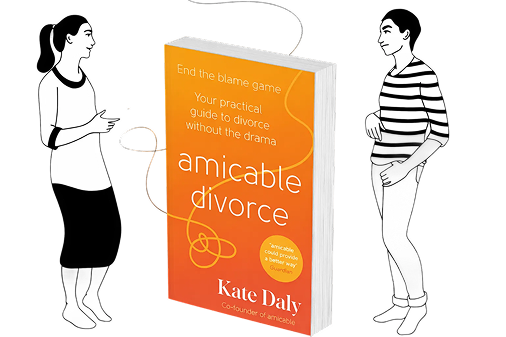
Comments (0)