
What is a deed of trust, and do you need one?


| A deed of trust (also called a declaration of trust) is a legal document that can record who owns what share of a property, what each person put in and how any sale proceeds are divided. In England and Wales, it's drawn up at the point of purchase, usually alongside your conveyancing. Most couples buying together benefit from having one, particularly when contributions are unequal. Buying a home together is one of the biggest financial commitments you'll make as a couple. It's also one of the clearest moments to get things down in writing, when you're on the same page and planning your future together. |
|---|
A deed of trust (sometimes called a declaration of trust) records what you've both agreed. It sits alongside the legal title to your property and makes ownership shares clear from day one. At amicable, we think of it as the first rung of the ladder for couples building a life together in England and Wales.
What does a deed of trust actually record?
A deed of trust records the beneficial ownership of a property. That means who really owns what. The Land Registry title document shows just the legal owners of the property – this can be different from the beneficial owners.
In practice, it typically sets out:
- each person's ownership share (as a fixed percentage, or one that adjusts with contributions)
- who paid what into the deposit
- how the mortgage and ongoing costs are split
- what happens to the money when the property is sold
It's a snapshot of what you've agreed at the point of purchase, but will continue to determine how the beneficial ownership of the property is owned. The document stays private. It's not filed at the Land Registry, although a restriction may be noted on the title.
How does it relate to joint tenants and tenants in common?
When you buy a property together, your conveyancer will ask how you'd like to hold the legal title. There are two options.
- Joint tenants means you own the whole property together, with no separate shares. If one of you dies, the other automatically inherits (regardless of any will). You can't hold unequal shares this way.
- Tenants in common means you each own a distinct share, which can be unequal. If one of you dies, your share passes according to your will rather than automatically to the other person. This is the structure that lets a deed of trust record your real ownership split.
If your contributions are unequal (different deposit amounts, different incomes or family money in the mix), tenants in common with a deed of trust is generally the right approach. Your conveyancer can set this up at purchase.
Who draws up the deed?
A deed of trust is a regulated, property-law document. It's drawn up by conveyancers, property solicitors or specialist drafters, usually at the same time as your conveyancing. amicable works with a partner law firm to provide deeds for couples who want the legal side handled simply, with support throughout.
The deed is signed and witnessed to make it legally valid. Once it's in place, it's binding between the co-owners.
Do you need a deed of trust if you're buying together?
However, they can help clarify matters when contributions are unequal, when incomes are different or when family money is involved in the purchase.
- Unequal contributions. One of you is putting in a bigger deposit, or family money is going into the purchase. A deed of trust records those contributions so they're reflected in the ownership shares.
- When you're not married. For unmarried couples, a deed of trust is the clearest way to record what each person owns. Without evidence to the contrary (such as a deed of trust), the starting point is that the beneficial ownership of the property mirrors the legal ownership (which may not reflect what you've actually put in).
It's worth knowing that for married couples, a deed of trust has less force. A divorce court can, in some circumstances, disregard it when dividing assets and order a different division of the property. Its core value is for unmarried co-owners.
What about a cohabitation agreement?
A deed of trust and a cohabitation agreement are complementary. A deed of trust is focused entirely on the property. It records ownership shares at the point of purchase and governs what happens when the property is sold.
A cohabitation agreement is broader and more forward-looking. It covers your finances, bills, belongings and life together (not just the home). It can address what happens to the property, but it also covers all the other things that matter when you're building a shared life.
Think of the deed of trust as the focused, property-specific document and the cohabitation agreement as the bigger framework around it. Both are useful. They work together rather than replacing each other.
Read more about what a cohabitation agreement covers and how it sits alongside a deed.
What happens without one?
Without a deed of trust, ownership is governed by general property law. If there's no written record of what each person contributed, the starting assumption is that the beneficial ownership is shared equally between the legal owners. In some cases, a court has to reconstruct your intentions from evidence. That process is governed by the Trusts of Land and Appointment of Trustees Act 1996 (TOLATA) and it's fact-heavy, uncertain and costly.
Getting a deed of trust in place at the point of purchase is far simpler than trying to establish your intentions later.
Key takeaways
- A deed of trust (or declaration of trust) records who owns what share of a property and what each person contributed
- It sits alongside the legal title and governs what happens when the property is sold
- It's most valuable for unmarried couples, particularly where contributions are unequal
- For married couples, a deed has less force (a divorce court can, in some circumstances, disregard it)
- A deed of trust covers the property only; a cohabitation agreement covers the wider picture
- Both documents are useful and work well together
- A deed of trust is drawn up by a conveyancer, solicitor or specialist drafter, usually at purchase
Frequently asked questions about a deed of trust
Do we need a deed of trust if we're both buying equal shares?
If you're genuinely contributing equally and you're happy to own the property as joint tenants or equal tenants in common, you may not need one. But if your initial or future contributions will differ, it's worth having a conversation with a specialist. A deed of trust is much simpler to set up at the point of purchase than to add later.
Can we change the deed later if our contributions change?
Yes. A deed of trust can be updated to reflect changes in contribution, for example if one of you inherits money and uses it to pay down the mortgage. You'd need a new deed of trust drawn up, which is more involved than setting one up at purchase. It's worth thinking through your likely future contributions when you first put the deed of trust in place.
What happens to the deed if we get married later?
The deed of trust still exists after you marry. But its legal force changes. In divorce proceedings, a court has more discretion to disregard it and divide assets differently. This is one reason why couples planning to marry may want to consider a prenup alongside the deed.
Is a deed of trust the same as a declaration of trust or a trust deed?
Yes. Deed of trust, declaration of trust and trust deed are all terms for the same document. They're used interchangeably by different solicitors and services. The underlying purpose is the same: recording who owns what.
Does a deed of trust need to be registered at the Land Registry?
The deed itself is a private document and isn't filed at the Land Registry. If you own the property as tenants in common, a restriction is typically noted on the title to flag that the property can't be sold without both co-owners' consent. Your conveyancer handles this as part of the purchase.
What if I'm buying with a friend or family member, not a partner?
A deed of trust works just as well for friends, siblings or family members buying together. The principles are the same: recording contributions, setting out ownership shares and making clear what happens on sale. If you're buying with someone who isn't a romantic partner, a cohabitation agreement isn't appropriate (but a deed of trust still is).
Ready to get things clear from the start?
Buying a home together is exciting, and it's the ideal time to get clear on each of your ownership shares.
If you'd like to talk through what you need (a deed, a cohabitation agreement or both), our specialists are here to help. Book a free 15-minute consultation and we'll point you in the right direction.
Alternatively, get started on creating a cohabitation agreement with your partner.

Your guide to a kinder divorce
What if divorce didn’t have to be a battle?
In amicable divorce, Kate Daly offers compassionate, practical guidance to help you separate in a kinder, better way. Whether you’re just beginning, working through the practicalities or adjusting to co-parenting, this book meets you exactly where you are - and helps you move forward with confidence.
Order on Amazon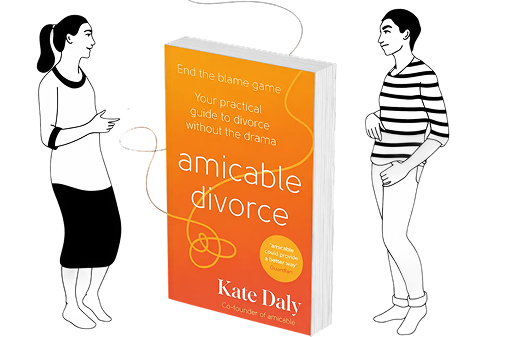
Comments (0)