
Deed of trust vs cohabitation agreement: which do you need?


| A deed of trust and a cohabitation agreement do different jobs, and plenty of couples want both. In England and Wales, a deed of trust records who owns what share of your home. A cohabitation agreement covers your wider finances and life together, and keeps up as things change. |
|---|
If you're buying a home together, you've probably come across both a deed of trust and a cohabitation agreement. You might be wondering which one you actually need. It's a fair question, and the honest answer is that they're not rivals.
One records your shares in the property, and the other covers everything around it. Here's how to tell what's right for you.
What's the difference between a deed of trust and a cohabitation agreement?
They cover different ground. A deed of trust, which is also sometimes called a declaration of trust or trust deed, is about the property. It records each person's share, what you each paid and what happens if you sell. A cohabitation agreement is broader. It covers your finances, bills, belongings and life together, and what you'd both want to happen if your relationship ended. The simplest way to hold them apart is that the deed covers the home, and the agreement covers everything else.
What does a deed of trust cover?
The home, and only the home. It records each person's share, the deposits you put in, how you split the mortgage and what happens when you sell. It's legally binding between you as co-owners, and it's usually drawn up at the point of purchase by your conveyancer or a property solicitor. A deed of trust unmarried couples who own a home together.
What does a cohabitation agreement cover?
Everything around the property, and more. A cohabitation agreement sets out how you share bills and finances, and who owns what. It also covers what you'd both want to happen if you separated. It's treated as a contract between you, and you can update it as your life changes. It can sit alongside a deed of trust, or include the property shares within it.
Do you need one, or both?
It depends on what you want to cover. If you're buying a home with unequal shares, a deed of trust records that fairly at the point of purchase. If you want the wider picture covered, and kept current, a cohabitation agreement does that. Many couples have both: the deed for the home, and the agreement for everything else.
When should you sort each one out?
A deed of trust is usually drawn up at the point of buying, alongside your conveyancing. A cohabitation agreement can be made any time. It's worth revisiting as things change, like a new baby, a new job or a bigger contribution from one of you. The best time to make these decisions is while you're both calm, clear and planning together.
Key takeaways
- A deed of trust and a cohabitation agreement do different jobs, so it's rarely one or the other.
- A deed of trust records your shares in the home and is legally binding between co-owners.
- A cohabitation agreement covers your wider finances and life, and can be updated over time.
- A deed is usually drawn up at purchase; an agreement can be made any time.
- Many couples want both, the deed for the home and the agreement for everything else.
Deed of trust vs cohabitation agreement
| Deed of trust | Cohabitation agreement | |
|---|---|---|
| What it covers | Your shares in the home | Your wider finances and life together |
| Legal status | Legally binding between co-owners | Treated as a contract between you |
| When it's made | At purchase, via a conveyancer or property solicitor | Any time, with a relationship service like amicable |
| Best for | Recording unequal ownership shares | Agreeing the bigger picture and keeping it current |
| Can you have both? | Yes, they work side by side | Yes, the agreement can sit alongside or include the deed |
Frequently asked questions about deed of trust vs cohabitation agreement
Do I need a deed of trust or a cohabitation agreement?
It depends on what you want to cover. A deed of trust records your shares in the home. A cohabitation agreement covers the wider picture, and many couples want both.
Is a deed of trust the same as a declaration of trust?
Yes. Deed of trust, declaration of trust and trust deed all mean the same document.
Which one is legally stronger?
They're not really competing. A deed of trust is legally binding between co-owners. A cohabitation agreement is treated as a contract. But they cover different things, so the question is usually which you need, not which is stronger.
Can a cohabitation agreement include a deed of trust?
Yes. An agreement can sit alongside a deed of trust, or set out the property shares within it.
When should we sort these out?
A deed of trust at the point of buying, with your conveyancer. A cohabitation agreement any time, and it's worth updating as your life changes.
Who draws up a deed of trust?
A conveyancer or property solicitor, usually as part of your purchase. It's a regulated property task, so it's handled by a qualified professional.
Get clear together
Not sure which you need? That's exactly what a quick chat is for. Book a free 15-minute advice consultation and we'll help you work out whether a cohabitation agreement, a deed of trust or both is right for you.
amicable isn't a law firm. We're relationships and money experts in England and Wales, here to help you decide together.

Your guide to a kinder divorce
What if divorce didn’t have to be a battle?
In amicable divorce, Kate Daly offers compassionate, practical guidance to help you separate in a kinder, better way. Whether you’re just beginning, working through the practicalities or adjusting to co-parenting, this book meets you exactly where you are - and helps you move forward with confidence.
Order on Amazon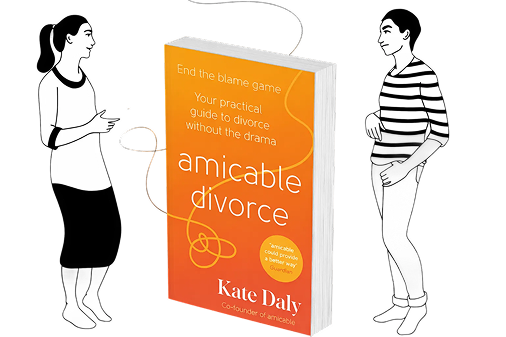
Comments (0)