
Buying a home together: what to agree before you sign


There's a lot to think about when you're buying a house together. Mortgage in principle, surveys, solicitors, what colour to paint the spare room. But before any of that, there are a few conversations worth having between the two of you.
These are conversations about how you'd both like things to work, in practice, as life unfolds. Getting them out in the open early means everything that comes after feels simpler.
The mortgage and the deposit: who's putting in what
This is the most obvious place to start. Some couples split the deposit equally. Some put in different amounts because their savings aren't equal. Some have help from family, whether as a gift, a loan or something in between.
Whatever shape your deposit takes, it's worth being clear about:
- How much each of you is contributing
- Where any family money has come from, and whether it's a gift or a loan
- How the mortgage payments will be split going forward
- Whether either of you is contributing in non-cash ways, like renovations, paying for furniture or covering bills while the other tops up the deposit
Write it down. Even a simple shared note keeps the picture clear for both of you.
Joint tenants vs tenants in common: what's the difference
When two people buy a house together, you have to decide how you'll legally own it. There are two options.
Joint tenants. You both own the whole property, equally. If one of you dies, the other automatically inherits the property. There's no separate 'share', it all sits together.
Tenants in common. You each own a defined share of the property. Those shares can be 50/50 or any other split (60/40, 70/30, whatever reflects what you've put in). If one of you dies, your share doesn't automatically go to the other person, it goes to whoever you've named in your will.
Most couples who put in equal amounts go with joint tenants. Couples whose contributions are different often choose tenants in common, so the ownership reflects what each person has put in. There's no right answer, but there is one that fits your situation.
We've written more about this in our tenants in common vs joint tenants guide.
Unequal contributions: how to keep things fair
If one of you is putting more into the deposit, or paying more of the mortgage, that doesn't have to feel awkward. It just needs to be clear.
Some couples keep things 50/50 regardless and call it even. Some adjust the ownership shares to reflect what each person has contributed. Some have one person contributing financially and the other doing more around the house, and they decide together that it balances out. All of those work, as long as both of you feel comfortable with the answer.
The questions worth talking through:
- Are we both happy with how we're splitting the deposit?
- If one of us puts in more, do we want that reflected in our shares, or do we want to keep it equal?
- How will we handle one-off costs going forward, like repairs, big appliances or future renovations?
- What happens if one of us pays for an extension or improvement on our own?
Why a verbal agreement isn't enough
Most couples have conversations like the ones above. But the conversations don't always make it onto paper. And when they don't, the law fills the gaps with assumptions that may not match what either of you thought you'd agreed.
This matters more if you're not married. Unmarried couples don't have the same automatic legal protections as married couples in England and Wales. There's no such thing as a common law marriage here, however long you've been living together. If you separated, the law would look at whose name is on what, not what you'd both verbally agreed years before.
That's a good reason to put what you've talked through into writing while it's all fresh and you're on the same page.
How a living together agreement makes everything clearer
A living together agreement (also called a cohabitation agreement) is a written record of what you've both agreed about money, the home and how you'd handle things if circumstances changed. It's drafted to fit your situation, not a one-size-fits-all template.
It can cover:
- How much each of you contributed to the deposit
- How the mortgage and household bills are split
- What happens to the property if you separated, including how any equity is shared and costs are covered
- How any improvements or extensions are handled
- Anything else that matters to the two of you
It's about putting the conversation you've already had into a clear, agreed format so you both know where you stand.
How amicable can help
Our Cohabitation Agreement Service is £800 fixed fee, including VAT. A dedicated amicable Specialist guides you both through the process: a simple online financial disclosure you complete together, a 30-minute review session, and a legally written living together agreement that captures what you've already agreed between you. It's collaborative, simple and explained in plain English (no jargon, no scary letters).
If you haven't fully agreed the detail yet, the Living Together Planning Session (£210) is the place to start. It's the conversational step that helps you both land on a plan together. Many couples take it before going on to a full agreement.
Buying a home together is one of the happiest things you'll do. A bit of practical planning at the start means it stays that way.
£800 fixed fee inc VAT. A Specialist with you the whole way.Not ready for a full agreement yet? Book a Living Together Planning Session for £210.

Your guide to a kinder divorce
What if divorce didn’t have to be a battle?
In amicable divorce, Kate Daly offers compassionate, practical guidance to help you separate in a kinder, better way. Whether you’re just beginning, working through the practicalities or adjusting to co-parenting, this book meets you exactly where you are - and helps you move forward with confidence.
Order on Amazon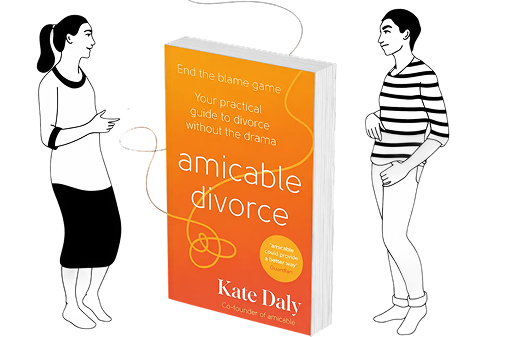
Comments (0)