
What happens to your home if your unmarried partner dies?


| If your unmarried partner dies in England and Wales, what happens to your home depends on how the property is owned, whether there is a valid will and what you've agreed in writing. Joint tenants usually means the surviving owner receives the home automatically, while tenants in common means each person's share passes under their will or, without one, under intestacy rules. If one partner owns the home and the other is not named on it, the position can be very different. amicable helps couples talk through these questions clearly, so you can look after each other and your families. |
|---|
This can feel like a difficult conversation to start. Nobody wants to make home life feel heavy, especially when things are settled and happy.
But if you're unmarried and share a home, it's kinder to talk about what would happen while you both can. The aim isn't to make the relationship feel legal or formal. It's to make sure the people you care about are not left guessing at a difficult time.
This is especially important if one of you owns the home, you own it in unequal shares or either of you has children from a previous relationship. This guide explains the main questions to think about, and how to start putting a clearer plan in place.
What happens if your unmarried partner dies and there is no will?
If your unmarried partner dies without a valid will, intestacy rules decide who inherits their estate. An unmarried partner may not automatically inherit under those rules, even if you have lived together for a long time.
That can come as a shock to couples who have built a life together. The law does not treat living together in the same way as marriage or civil partnership in England and Wales.
A will is the main way to set out who should inherit your share of the home and anything else you own. It can also help make sure your wishes are clear for your partner, children and wider family.
It's better not to rely on assumptions about what your partner will receive.
Does it matter whether you own the home as joint tenants or tenants in common?
Yes. How you own the home together can make a big difference if one of you dies.
If you own as joint tenants, you own the whole property together rather than holding separate shares. If one of you dies, the surviving owner usually receives the whole property automatically through survivorship.
If you own as tenants in common, each person owns a distinct share. That share can pass under their will. If there is no valid will, it may pass under intestacy rules instead.
This is why it matters to know how your home is held. It affects whether the home passes automatically to the surviving partner, or whether the deceased partner's share is dealt with through their estate.
If you're not sure how you own the home, your conveyancing documents or Land Registry title may help. You may also want to ask a conveyancer or solicitor to check the position.
What if one partner owns the home and the other lives there?
If your partner owns the home in their sole name, you should not assume you can stay there automatically after they die. What happens may depend on their will, your circumstances, any written agreements and the wider legal position.
That doesn't mean the conversation needs to feel frightening. It means the plan should be clear before anyone has to rely on it.
This situation often matters for later-life couples. One person may move into a home the other already owns. You may both think of it as your shared home, but the legal ownership may still sit with one person.
If the home-owner wants their partner to be able to stay there, or wants the home to pass in a particular way, they need proper advice and a will that reflects that intention.
How can you look after your partner and your children?
For many couples, the question isn't simply 'partner or children'. It's how to look after both in a way that feels fair.
You may want your partner to have somewhere settled to live. You may also want your children, including children from a previous relationship, to inherit what you intend them to inherit.
Those wishes can sit together, but they need careful planning. A will can set out who should inherit your share of the home. In some situations, specialist legal advice may be needed to work out how your partner and children can both be provided for.
The conversation may feel delicate because it touches on family, loyalty and security. Try to keep the focus on care. You're not choosing between people. You're making your wishes clear so the people you love do not have to work them out later.
What should you put in writing?
You should start with your wills. A will records who should inherit what you own when you die. If you own a home, or a share of a home, your will should reflect what you want to happen to it.
If you own the home together, you may also need to check whether you are joint tenants or tenants in common. If you own as tenants in common, a deed of trust can record each person's share of the property. Your will then needs to deal with who should inherit your share.
A cohabitation agreement can also help while you are both living together. It can record what you've agreed about the home, money and practical arrangements. It can sit alongside your wills, but it does not replace them.
You may also want to make sure any wider paperwork reflects your wishes, such as pension nominations or life insurance beneficiaries.
The exact documents you need will depend on your situation. The first step is to agree what you both want to happen, then get the right professional support to record it properly.
How can amicable help you start the conversation?
amicable isn't a law firm and doesn't give legal advice. However, we help couples have the practical relationship conversations that often come before legal paperwork.
That can be helpful if you know you need to talk about the home, wills, children, family money, or what each of you wants for the future, but you're not sure how to start.
We can help you talk through key questions you might have, as well as helping you identify what you may need to ask a solicitor, conveyancer, will writer or financial adviser.
From there, you can decide what legal or financial support you need. The aim is to make the conversation feel calm and simple to act on.
Key takeaways
- Living together does not create the same legal position as marriage or civil partnership in England and Wales.
- What happens to the home depends on ownership, wills and any written agreements.
- Joint tenants and tenants in common work differently when one partner dies.
- If one partner owns the home, the other partner should not assume they can stay there automatically.
- A will is central because it sets out who should inherit what you own.
- A cohabitation agreement can sit alongside your wills, but it does not replace them.
Home, wills and ownership at a glance
| Situation | What usually matters |
|---|---|
| You own as joint tenants | The surviving owner may receive the whole home automatically through survivorship. |
| You own as tenants in common | Each person's share usually passes under their will or intestacy rules. |
| One partner owns the home | The surviving partner's position may depend on the will, written agreements and wider circumstances. |
| You have children from previous relationships | Your will should reflect how you want your partner and children provided for. |
| There is no will | Intestacy rules apply, and an unmarried partner may not inherit automatically. |
| You have a cohabitation agreement | It may record your arrangements while living together, but it does not replace a will. |
FAQ
What happens if my unmarried partner dies without a will?
If your unmarried partner dies without a valid will, intestacy rules decide who inherits. An unmarried partner may not automatically inherit under those rules, even if you lived together for many years.
Does my partner automatically inherit my share of the house?
Not always. It depends on how you own the home. If you own as joint tenants, the surviving owner usually receives the home automatically. If you own as tenants in common, your share usually passes under your will or intestacy rules.
What happens if we own as joint tenants?
If you own as joint tenants and one of you dies, the surviving owner usually becomes the sole owner of the property through survivorship.
What happens if we own as tenants in common?
If you own as tenants in common, each person has a distinct share. That share can be left in a will. If there is no valid will, it may pass under intestacy rules.
What if I live in my partner's house but I'm not on the title?
Your position may be different from someone who legally owns the home. What happens may depend on your partner's will, any written agreements, your circumstances and the wider legal position.
Can a cohabitation agreement replace a will?
No. A cohabitation agreement can record what you've agreed while you're living together, but it does not replace a will. You need a will to set out who should inherit what you own when you die.
How do we make sure my partner and children are both looked after?
Start by talking about what you want to happen to the home. Then get specialist legal advice so your wills, ownership structure and any written agreements reflect those wishes.
Make a clear plan while you can
Talking about what happens if one of you dies can feel uncomfortable. But the conversation is really about care. It's about making sure your partner, children and family understand what you both wanted.
If you're unmarried and sharing a home, it's better to make the plan clear rather than rely on assumptions. Check how the property is owned. Make sure your wills are up to date. Record anything important clearly, so nobody is left trying to work it out at a difficult time.
amicable helps couples talk through home, family and future plans in a calm, practical way. Book a free 15-minute advice consultation to talk through how to start the conversation about your home, wills and future plans.
amicable isn't a law firm. We help couples in England and Wales talk through what matters, so you can get the right legal advice with confidence.

Your guide to a kinder divorce
What if divorce didn’t have to be a battle?
In amicable divorce, Kate Daly offers compassionate, practical guidance to help you separate in a kinder, better way. Whether you’re just beginning, working through the practicalities or adjusting to co-parenting, this book meets you exactly where you are - and helps you move forward with confidence.
Order on Amazon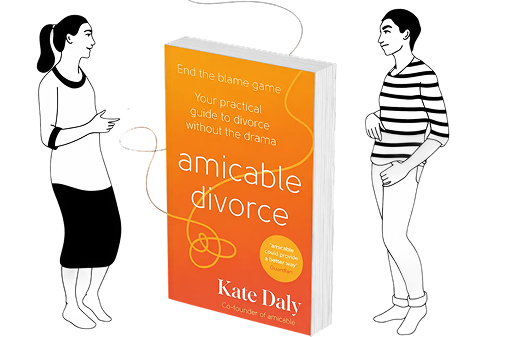
Comments (0)