
Divorce and women: What you need to know


Divorce and women: What you need to know
Divorce can feel overwhelming and for women there can often be specific emotional, financial and social challenges during the process. Career breaks for childcare, part-time working patterns, pension gaps, name changes, the mental load of co-parenting: these are experiences that often shape the divorce journey in specific ways for women.
This guide by Divorce Specialist Katie Reid offers practical advice and emotional support to help you cope, heal and rebuild your life after divorce.
The emotional stages of divorce
Grief models like the Kübler-Ross framework apply to divorce because separation involves genuine loss, even when the relationship needs to end. Understanding these stages helps you recognise that your feelings are normal and that healing takes as long as it takes.
Common emotional stages include:
-
Shock and numbness: The early days when reality hasn’t fully sunk in. You may feel on autopilot or unable to make decisions.
-
Acute pain and guilt: Intense sadness. You might question every decision you made.
-
Anger and blame: Frustration surfaces, sometimes directed at your ex, yourself or the situation.
-
Loneliness and reflection: The dust settles and quiet moments can sometimes bring difficult feelings.#
-
Gradual stabilising: Life becomes calmer. Physical symptoms associated with grief can lessen. Sleep quality improves.
-
Rebuilding: Functional capacity returns. You start solving practical problems, decisions are easier and you feel able to tackle more detailed information.
-
Renewed hope: You accept reality and begin looking forward with a sense of purpose.
These stages overlap and repeat. One week you might feel strong - the next, you slip backwards. This is completely normal.
How your emotional stage affects decision-making:
During initial stages, absorbing legal information feels almost impossible. Anger can push you towards adversarial choices that increase conflict (and in turn, cost). Loneliness might lead to impulsive decisions about dating or finances. However, stabilising brings clearer thinking for long term goals.
Support options at each stage:
- Journaling or doing creative hobbies to process your feelings
- Therapy or counselling for deeper exploration
- Speaking to your GP about sleep, anxiety or low mood if this persists
- A divorce coach for structured guidance
- A free advice call with an amicable Divorce Specialist for grounded, practical support
The legal process in England and Wales
In England and Wales, the no-fault divorce system (introduced April 2022) allows online applications and separates the divorce process from financial arrangements.
Top tip from our Divorce Specialists: It's strongly advisable to reach a financial agreement and formalise it in a consent order before applying for your final order. This makes your financial agreement legally and protects you from any claims in the future.
| Step | What happens |
|---|---|
| Application | One or both people apply online. The marriage must be legally recognised as irretrievably broken down. |
| Conditional order | After a 20-week reflection period, the court confirms the divorce can proceed. |
| Financial agreements | Reach agreement on assets, pensions, property and spousal maintenance. |
| Consent order | The court approves the financial agreement, making it legally binding. | Final order | The divorce is finalised. You are no longer married. |
amicable can help you reach and formalise a financial agreement without each person needing to hire a traditional solicitor – keeping costs fixed and the process smoother and kinder.
The financial realities women often face in divorce
The financial impact of divorce is often not gender-neutral. Research consistently shows that women experience a greater drop in household income after divorce than men, and that this gap widens over time. Understanding why – and what you can do about it – is one of the most important things this guide can offer you.
The pension gap
Pensions are often the largest asset in a divorce, yet they are regularly overlooked – or traded away in favour of keeping the family home. For women, this is especially significant.
Women in England and Wales statistically retire with significantly smaller pension pots than men. Did you know that women over 50 have an average of £30,644 pension vs men's £54,512? This is a 44% gap (PensionBee and government figures officially state the gender pension gap is around 35-48%)
Career breaks for maternity leave and childcare, periods of part-time work and salary gaps all reduce pension contributions over time. If you've spent years working part-time or not at all while raising children, your pension may be a fraction of your ex-partner's.
What this means in practice:
-
Pension sharing: a court order can split your ex-partner's pension and award you a portion of it. This must be formalised in a pension sharing order and is separate from the divorce itself.
-
Pension offsetting: you may choose to take a larger share of another asset – such as the family home – in exchange for not claiming pension. This can feel right in the short term but often disadvantages women in retirement.
-
State pension: check your National Insurance record. Years out of the workforce reduce your state pension entitlement. You may be able to make voluntary NI contributions to fill any gaps.
Get specialist advice: pension sharing is complex. A Divorce Specialist or regulated financial adviser with experience in divorce can model different scenarios and help you understand the long-term impact of each option.
A tip from our Divorce Specialists: Don't agree to a financial settlement before getting advice on your pension specifically. Many women prioritise keeping the family home, which is understandable – but a house doesn't provide retirement income. A pension does.
The family home
Deciding what to do with the family home is one of the most emotionally and financially complex decisions in divorce. Common options include:
- Selling the property and splitting the proceeds
- One person buying out the other's share and staying in the home
- A Mesher order: delaying the sale until children finish full-time education, after which the property is sold and proceeds split. This can provide stability for children but is not always financially straightforward – get advice before agreeing to one.
If you're considering staying in the family home, be realistic about whether you can afford the mortgage on one income and factor in maintenance, insurance and any equity you may be giving up elsewhere.
Spousal maintenance
Spousal maintenance – regular payments from one ex-partner to the other – is more commonly awarded where there has been a long marriage and significant income disparity. Courts consider factors including the length of the marriage, each person's earning capacity and any career breaks taken for childcare. It’s not guaranteed, and attitudes in courts have shifted towards expecting financial independence where possible. A Divorce Specialist can help you understand whether it is likely to apply in your situation.
Post-divorce budgeting
Many women underestimate how much their finances will change after divorce. Building a clear and realistic picture of your income and outgoings – including child maintenance, spousal maintenance and any benefits or tax credits you may now be entitled to – is an important early step. Women's household income falls ~41% in year after divorce vs 21% for men (Legal & General), so it's important to consider all your options practically.
Try tracking your essential spending for one or two months before finalising any financial agreement. This gives you a realistic baseline rather than an estimate.
It may also be worth speaking to a regulated financial adviser, especially if you’re approaching mid-life, perimenopause or retirement. They can help you plan for your future.
Octopus Money brought together an expert panel to discuss the gender money gap - exploring the financial challenges many women face, from the motherhood penalty and financial anxiety to investment myths. amicable Co-founder, Kate Daly, took part to speak on the hidden impact of the mental load.
You can find out more about this discussion by reading this article and watching the panel interview
Co-parenting and supporting your children through separation
If you have children, the co-parenting relationship is often where emotional and practical pressures are most intense. Cooperative co-parenting, where it’s safe and possible, protects children and lowers stress for everyone, including you. In England and Wales, the law focuses on children’s welfare and most parents agree arrangements without going to family court, sometimes with help from services like amicable.
Key principles for healthy co-parenting:
- Keep children out of adult conflict
- Never speak negatively about or blame the other parent in front of your child(ren)
- Maintain predictable routines between homes
- Focus on what your children need rather than how you feel about your ex-partner
Helping children adjust to two homes
- Align handovers with school or nursery pick-up and drop-off times to avoid tense doorstep moments
- Create simple, age-appropriate explanations about the new routine
- Use visual calendars or charts for younger children to understand where they’ll be
- Keep key items at both homes (school uniform basics, toothbrush, pyjamas) to reduce stress about forgotten belongings
- Let children bring a comfort object between homes if it helps them feel secure
- Avoid quizzing children about what happens at the other home
If direct communication is difficult, try co-parenting apps or written communication only to reduce tension. For example: ‘Hi. Just confirming the parents' evening is Thursday at 6pm. I'll attend the first slot – let me know if the second works for you.’
Important note: If your relationship has involved domestic abuse, controlling behaviour or serious safety concerns, cooperative separation and co-parenting may not be appropriate for your situation. In these circumstances, specialist legal support and potentially a court order are needed. Keeping conflict low doesn’t mean accepting unsafe situations. You can reach out to Women's Aid or Refuge, who can help you understand your options.
Career breaks and returning to work
If you've taken time out of the workforce, for example for maternity leave, childcare or to support a partner's career, divorce often brings an urgent need to re-enter employment or increase your income. This is one of the most common challenges stay-at-home parents can face, and one that is rarely discussed honestly.
Reframing the career break
Years spent running a household, managing family logistics, caring for children and navigating complex family dynamics develop real, transferable skills: organisation, negotiation, crisis management, budgeting, communication. These are not gaps – they are experience. Update your CV and LinkedIn profile to reflect them.
Practical routes back to work
Returnship programmes: structured return-to-work programmes aimed at people who've had career breaks are offered by a growing number of employers across finance, tech and the public sector. They typically last 12–16 weeks and often lead to permanent roles. Free and low-cost training: government Skills Bootcamps offer free, flexible training in digital, technical and professional skills. Platforms like Coursera and LinkedIn Learning provide accessible, recognised qualifications. For women returning to work, you could start by finding out how IVEE can support you with a CV review and training. Part-time and flexible roles may be a good start: starting with part-time while co-parenting routines settle is a sensible stepping stone. Many roles now offer hybrid working.
Volunteering: a structured volunteering role can rebuild professional confidence, provide references and open doors to paid opportunities.
Benefits and tax credits
If you're returning to work or have children, check your entitlement to Universal Credit, child tax credits, free childcare hours and any housing benefit. Your entitlement may change significantly after divorce. Citizens Advice and the government's benefits calculator at GOV.UK can help you understand what you're eligible for.
How can you rediscover yourself and plan your next chapter?
After the intensity of separation fades, a new chapter becomes possible. For many women, this is not just recovery – it's an opportunity to build a life more aligned with who you actually are and what you want from the future.
Five steps to rediscover yourself:
- Reflect on past relationship patterns. What worked? What didn’t? What will you do differently?
- Consider what a good life looks like now, which may differ from your goals in your twenties or thirties.
- Take short courses, training programmes or volunteer to rebuild confidence.
- Consider returnship programmes aimed at parents re-entering the workforce.
- Start with part-time or flexible roles while co-parenting routines settle.
Looking after your mental and physical health:
- Speak to your GP about sleep issues, anxiety or low mood. Mention if you’re struggling; they can refer you to NHS Talking Therapies in England.
- Physical movement helps regulate mood and stress. Short walks, low-cost community classes or free online workout videos all count.
- Hormonal changes like perimenopause or menopause can overlap with divorce, making symptoms feel more intense. A GP or women’s health clinic can offer specialist support, including HRT options where appropriate. Reduce alcohol, which affects sleep and mood more than you might realise.
- Aim for consistent sleep times, even when life feels overwhelming.
- Prioritising your health isn’t selfish. It benefits your children, your work and your future relationships.
Setting goals when life feels chaotic
After separation, life can feel unpredictable. Structure provides a sense of safety when everything else feels uncertain. Setting goals and establishing routines can help you feel more in control.
SMART goals for your divorce
SMART goals - Specific, Measurable, Achievable, Relevant and Time-bound – work across all the key areas of rebuilding after divorce:
Finances
Create a detailed post-divorce budget by the end of this month
Emotional wellbeing
Attend bi-weekly counselling sessions for the next three months
Home
Declutter one room per week for two months to reclaim your space
Career
Update your CV and apply for three roles, or enrol in one training course within two months
Co-parenting
Establish a consistent homework routine with children by half-term
On difficult days, go back to basics: take a shower, go for a short walk, complete one small task or send one text to a supportive friend. Goals should be flexible. Life – and occasionally your ex – may throw curveballs. Review your goals monthly and adjust if you need to.
Building your support network
Divorce often shrinks social circles. Couple friendships may change or fade over time, and you might feel embarrassed or lonely. This is normal and you’re not alone. But it’s also why rebuilding your support network is essential for healing after separation.
Identify safe people you already know:
- Friends who listen without judgment
- Siblings or family members who offer practical help
- Colleagues who understand your situation
- Neighbours who can help in small ways
- Community groups or faith organisations you’re already connected to
Create a ‘divorce support team’ with different roles:
You can create different types of support, such as emotional, practical, financial and legal - to help you navigate these changes.
- Close friends, a therapist or a support group
- Childcare swaps, help with moving and lifts
- amicable Divorce Specialist or Octopus Money Expert
- Decide how you’d like your separation to unfold: negotiation, mediation, lawyers or a co-operative, kinder approach like amicable
Even casual interactions help. Chatting to other parents at the school gate or regulars at your local café can reduce loneliness and slowly rebuild confidence.
Prioritise relationships that feel respectful, inclusive and non-judgmental. It’s okay to set boundaries with or create distance from anyone who drains your energy during this difficult time.
Dating after divorce
There’s no correct timeline for dating after divorce. Focus on feeling stable on your own first. When you’re ready, be aware of red flags, be honest about your situation with new partners, and don’t let fear or loneliness push you into something wrong for you. You can listen to this episode of The Divorce Podcast about dating after divorce for more helpful tips and practical advice if you’re thinking you might be ready.
Should you change your name back after divorce?
One question that is specific primarily to women, and often underestimated in its emotional weight, is whether to revert to your maiden name after divorce.
There is no right answer. Some women find returning to their pre-marriage name an important part of reclaiming their identity. Others prefer to keep the same name as their children, or have built a professional reputation under their married name and don't want to change it.
If you do want to change your name back, your final order is sufficient legal evidence to change it on most documents. Update your passport, driving licence, bank accounts, HMRC records, pension providers and employer. Inform your children's school if your name will differ from theirs – this is common and straightforward. There is no deadline – you can make this decision whenever it feels right.
International Women’s Day reflection: This is a good moment to celebrate your resilience, consider women who inspire you and set one or two bold but realistic goals for the coming year. Women across the world are navigating divorce and rebuilding lives that are more honestly their own, giving us proof that life can flourish after marriage ends. Resilience isn't about pretending everything is fine. It's about taking one step forward at a time – with the right support around you.
Ready to take the next step?
Whether you’re at the start of separation or rebuilding years later, amicable is here to support you. Our fixed-fee services help couples in England and Wales navigate divorce, financial arrangements and co-parenting with less stress – and less cost.
Book a free 15-minute advice call to discuss your situation and understand your options. Our Divorce Specialists understand the specific challenges women face, from pension sharing to returning to work, and can help you feel clear and in control.
Useful links:
GOV.UK for up-to-date procedural information on divorce and child arrangements Resolution to find professionals committed to non-confrontational family law Gingerbread for single-parent support and advice Refuge if domestic abuse is involved Women's Aid for specialist support for women experiencing domestic abuse Citizens Advice for guidance on benefits, housing and legal rights after separation Our partners at BetterHelp offer counselling and therapy online at a time that suits you. They will match you with a qualified therapist based on what you’re looking for and want support with. If you’re a customer of amicable, you can receive 30% off your first month. Octopus Money to provide guidance on finances following a separation The Divorce Podcast for supportive advice, expert tips and real stories to help you through all aspects of separation
Frequently Asked Questions
1. What is the first practical step I should take if my divorce has just been finalised? Review your financial position as soon as you can. Check your income, outgoings and any new maintenance arrangements, then create a fresh budget that reflects your actual circumstances.
You may want to update your will, insurance beneficiaries and emergency contacts. If your finances aren’t yet formalised in a consent order, prioritise getting one to protect your rights to pensions and property.
2. What should women know about pensions in divorce? Pensions are often the largest financial asset in a divorce and are frequently undervalued by the person with the smaller pot – which is more commonly women. Don't agree to a financial settlement without getting specific advice on pension sharing or offsetting. The short-term appeal of keeping the family home can leave women significantly worse off in retirement.
3. Is it too late to rebuild my life if my divorce happened years ago? It’s absolutely not too late. Even if your legal process ended a long period ago, emotional healing, career changes and new relationships can develop at any stage of life. Many women in mid-life and beyond have retrained, launched businesses or formed new communities.
4. How can I rebuild my confidence at work after years as the primary caregiver? Career breaks are common and can be reframed as periods where you developed real, transferable skills. Running a household, managing schedules and handling crises all translate to professional settings. Update your CV and LinkedIn profile to reflect these strengths. Explore free or low-cost training through online courses, local colleges or volunteering to help build your confidence. Part-time or flexible roles can be a helpful stepping stone while co-parenting routines settle.
5. What if my ex refuses to cooperate with co-parenting arrangements? If direct discussion with your ex-partner feels impossible, try structured tools like co-parenting apps or written communication only to reduce tension. For serious disagreements or safety concerns, legal advice and potentially a court order may be necessary. Keep detailed records of all communication and focus on what you can control: your own responses and the stability of your home.
6. How do I balance taking care of my children with finding time for myself? Many women feel guilty about self-care after divorce, but it’s essential rather than optional. Even 10-15 minutes a day for rest or something you enjoy makes a real difference to mood and patience. Practical strategies include swapping childcare with another parent, using after-school clubs or asking family or friends to help. Reframe self-care as part of being a stable, present parent. When you’re calmer and healthier, your children benefit too.
7. What if there has been domestic abuse in my relationship? If your relationship has involved domestic abuse, coercive control or financial abuse, cooperative divorce may not be appropriate for your situation. amicable works with couples where both people can engage safely and voluntarily – if that's not the case for you, please reach out to Women's Aid or Refuge, who can offer confidential advice and help you understand your options.


Start your amicable divorce journey
Speak to an amicable Divorce Specialist to understand your options and next steps for untying the knot, amicably.
Your guide to a kinder divorce
What if divorce didn’t have to be a battle?
In amicable divorce, Kate Daly offers compassionate, practical guidance to help you separate in a kinder, better way. Whether you’re just beginning, working through the practicalities or adjusting to co-parenting, this book meets you exactly where you are - and helps you move forward with confidence.
Order on Amazon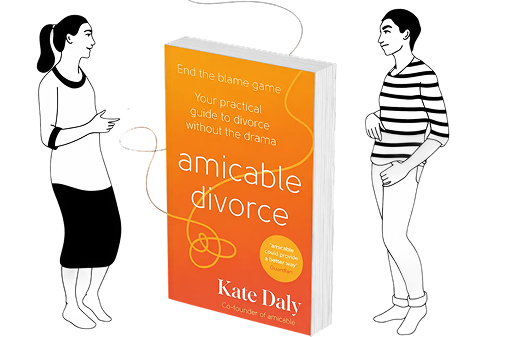
Comments (0)