-1.webp)
18-point divorce checklist for a smooth separation


Wondering how to get divorced? The process can seem daunting and complicated, but it doesn’t have to be. So many people feel overwhelmed by the paperwork and decisions involved, but a divorce checklist can help you stay organised and in control. That’s why we’ve put together an 18-point divorce checklist with all the things you’ll need to consider for an amicable separation.
We also have a divorce timeline that goes into detail about the entire divorce process.
Applying for divorce
Of course, the first thing you need to decide is whether you need to divorce, or just get legally separated. Depending on your circumstances, you may apply for divorce as a sole applicant or make a joint application with your ex-partner. The applicant is the person who initiates the divorce process and is responsible for submitting the application and paying the court fee. In a joint application, both parties apply together and share responsibility for the process.
As part of the online divorce application in England and Wales, you’ll now also be asked whether you intend to apply for a financial order (sometimes called a financial remedy order or consent order). This doesn’t mean you’re starting a dispute - it simply ensures that important financial matters, such as property, pensions or ongoing support are properly considered and can be formalised through the court.
At the same time, family courts encourage separating couples to explore non-court dispute resolution (NCDR) - such as services through amicable, mediation or other cooperative approaches - before turning to formal proceedings about finances or children. The focus is on helping families resolve arrangements together wherever possible, particularly where children are involved. Taking time to understand both the financial remedy process and your options for resolving things outside court can help you move forward with greater clarity and confidence.
Grounds for divorce
If you're getting divorced in England and Wales, you don't need to prove anyone did anything wrong or gather evidence about affairs or bad behaviour. You just need to confirm that your relationship is over and can't be repaired.
To get started, you'll fill out a divorce application form, pay the £[[court_application]] court application fee and provide your original marriage certificate (or a certified copy if you can't find the original). This no-fault approach means less stress and conflict for everyone involved.
Once you’ve applied, following our divorce checklist will help you become an effective co-parent, manage your finances and complete the right legal steps for your separation. Consider this your ‘to-do list’ for divorce.
- Submit your divorce application. This starts the divorce process.
Decide on a parenting plan
When going through a divorce, one of your most important priorities is the wellbeing of your children. Creating a clear and cooperative parenting plan can help shield your children from stress and ensure that both parents remain actively involved in their lives.
-
Agree on where your children will live. A parenting plan should include details about where children will live and how they will be cared for after separation.
-
Make a plan for how and when they will see both of you. Remember to talk about special occasions: decide how to arrange Christmas, birthdays and holidays.
-
Talk about how your children’s lives will be financed and decide who will pay for what, including any school fees.
-
Sort out how and when other family members, such as grandparents, will see your children.
-
Discuss any parenting values or rules for raising them and make sure you are both on the same page.
If you cannot agree on child arrangements, we may be able to help.
Figure out your financial agreement
Financial discussions during a divorce can be one of the most sensitive parts of the process. It’s important to make clear and fair decisions regarding your shared finances, debts and ongoing expenses, as the divorce itself can still be expensive.
Full and honest financial disclosure is essential for a fair divorce agreement. It is important to explain all financial circumstances clearly, as hiding any money or property is illegal and can invalidate agreements.
Gather important financial documents such as bank statements, recent payslips, tax returns, mortgage statements, and details of debts, as these will give you a full picture of your situation, and you’ll need them later on in the legal process anyway.
-
Decide whether you are keeping or selling the family home.
-
If you are keeping the home, decide which of you will live in it and who will live elsewhere.
-
Work out how you will be paying for both homes.
-
Agree on how to divide up your personal property.
-
Work out what investments and savings you have and decide how to divide them. This is the start of your financial agreement.
-
Work out what debts you have, like credit card bills or overdrafts, and decide how to split those too.
-
Make a plan for how to pay for any divorce fees.
Prepare and submit the legal paperwork for divorce
Understanding the key paperwork involved in the divorce process will help you stay organised and on track. Essential documents for divorce include your marriage certificate, birth certificates, financial statements, property deeds, pension information, and insurance policies. You should keep copies of all forms and documents you submit during the process.
-
Apply for a conditional order, which is a piece of legal paperwork that proves you can get divorced.
-
Apply for a final order, which is the legal paperwork that confirms you are officially divorced.
-
Submit a consent order if you want to make the agreements above legally binding.
-
Decide whether you want to make or change your will. This is important, as getting divorced may impact your will or life insurance.
Think about who you need to tell about your separation
After finalising your divorce, it’s important to tell relevant people and organisations of your change in marital status.
- Get in touch with all the organisations that need to know that your marital status has changed. These may include:
- benefits office
- your council
- mortgage lender
- utility companies
- tax office
- banks or building societies
- credit card provider
- house insurer
- life insurer
- student loan company
- pension provider
- GP surgery
- dentist
- optician
- any schools or nurseries
We appreciate that while a divorce checklist can put your mind at ease, the process can be emotionally difficult for those involved. If you’re still not sure how to prepare for your divorce or get started, you can book a free 15-minute consultation with one of our Divorce Specialists.
Our team is dedicated to helping you navigate the process amicably, with clarity and peace of mind.
Not only do we offer advice for couples, we can also provide support for your children and pets.

Read More
-2.webp)
We have outlined below when financial disclosure might be required, as well as the types of financial disclosure and where this sits within the divorce process.

Perhaps you and your partner have started to make decisions about the future apart now you have decided to separate. Perhaps you’re negotiating or mediating and have become stuck. Maybe it all feels a bit frustrating and you feel like your partner is never going to agree to anything.
.webp)
Telling your ex that you want a divorce is one of the most difficult parts of the divorce process and why many people end up staying in unhappy relationships, losing their confidence and their mojo.

Start your amicable divorce journey
Speak to an amicable Divorce Specialist to understand your options and next steps for untying the knot, amicably.
Your guide to a kinder divorce
What if divorce didn’t have to be a battle?
In amicable divorce, Kate Daly offers compassionate, practical guidance to help you separate in a kinder, better way. Whether you’re just beginning, working through the practicalities or adjusting to co-parenting, this book meets you exactly where you are - and helps you move forward with confidence.
Order on Amazon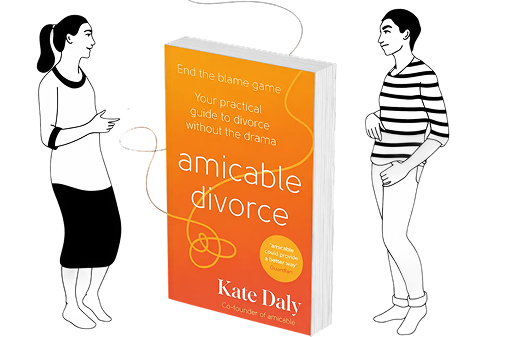
Comments (5)
Can I apply to get some of my husbands forces pension we've been married for 49 years
Hi Pamela, thank you for getting in touch with amicable. Please book a free 15-minute consultation with one of our experts, so we can learn more about your circumstances and provide personalised advice about pension-sharing.
My husband left me for another woman a year and half ago,we were together 16yrs since then he has cashed in his pension and is filing for divorce tomorrow,am I entitled to any of his pensions or not now he cashed it in,i don't work disabled and I cant afford a solicitor what do now?
Hi Linda, thank you for getting in touch with amicable. We're so sorry to hear about your situation. We have two helpful blogs that explain how pensions might be shared in divorce: https://amicable.io/divorce-and-pension-sharing-orders and https://amicable.io/divorce-and-pensions As we're a couples' service, we can only help further if both partners are prepared to negotiate together. You can access affordable legal aid at https://resolution.org.uk/
We separated 5 years ago. We want an amicable divorce. My ex wants half of my current pension. I want to half from when we separated. Is there guidance on this?