
What am I entitled to in divorce? A simple guide


In divorce, you're entitled to a fair share of everything you built together during your marriage - including your home, savings, pensions and other valuables. What you receive isn't based on your role in the marriage or who was at fault - it's about what's fair in your circumstances.
At amicable, we can help you understand what's fair for your situation and reach a financial agreement without going to family court.
One of the first questions people ask when they’re thinking about divorce is: 'What am I entitled to?'
It’s a completely natural question: you want to know what’s right, you want to understand whether you’ll be okay financially and you want to make sure you’re not being taken advantage of.
The divorce process is designed to ensure that each person will be financially secure and able to provide for themselves in the future.
Unfortunately, there’s no one-size-fits-all formula that says 'you get this much and your ex gets that much', it depends on your situation. How finances are divided depends on what's fair in your circumstances, not the reason for divorce or who initiates it.
But there are general principles that guide how finances are divided. Understanding these can help you work out what a fair settlement might look like for your situation.
Is the starting point always 50/50?
When you're going through a divorce, the court usually starts with a 50/50 split of everything you built together during your marriage.
But a divorce settlement isn't always as simple as splitting things down the middle. The court's main goal is making sure you both walk away with a fair share. They'll look at your money, how much you can earn and what you'll need in the future.
Sometimes, a straight 50/50 split wouldn't be fair. For example, maybe one of you earns much more money. Or perhaps one of you gave up your career to raise the children or support your ex-partner's job. When this happens, the court may change how they divide things.
The goal is always a settlement that recognises what you both put in – whether that's money or other contributions, and will provide what you'll both need going forward.
What gets divided in divorce?
You’ll split all the things you and your ex-partner built up together during your marriage. This includes:
- Your home and any other properties
- Savings and investments
- Pension funds
- Earnings and businesses
- Vehicles and valuables
- Personal belongings Debts also need to be considered - mortgages, credit cards, loans and overdrafts all factor into how things are divided.
The court will look at what you both need financially and what resources you each have. They want to make sure you can both move forward with financial security. Importantly, it doesn't always matter whose name something is in. Just because the house is only in your name doesn't automatically mean you get to keep all of it. The family home is considered a joint asset in divorce, regardless of whose name is on the title deeds. Everything goes into the pot to be considered.
What about money and property I had before marriage?
This is a common question. What if you owned a house before you got married, or you inherited money from a relative?
The name on the title deeds does not always determine what you’re entitled to from a divorce. Registering your home rights with the Land Registry can help protect your interest in the property, especially if you’re not the legal owner. These principles apply to civil partnerships as well as marriages.
However, there’s no automatic ringfencing of money and property (referred to legally as ‘marital assets’) you had before the marriage. If your needs can both be met without touching pre-marital assets, the court might decide to exclude them from the division. But if your needs can’t be met otherwise, they may be included.
Inheritances work similarly. The court might treat them as separate if there’s enough money without them. But if needs dictate that they have to be shared, they will be.
What influences how finances are divided in divorce?
Several factors influence how your finances get divided in divorce. Judges look at what you both need and what money you have coming in. They also think about how long you were married and if you have children.
How much you earn or have the potential to earn is really important. If one of you can make much more money than the other, this affects what you get in the end.
Other key factors include how old you both are and your health, for example if anyone has physical or mental health issues that might stop them working or supporting themselves. The lifestyle you had during your marriage matters too. All these factors help work out what's fair for your specific situation.
Let’s walk through the main ones.
Needs
One of the most important things that gets looked at is what you both need financially: things like where you live, food, travel costs and bills – plus what you'll need in the future.
If you've got children, their needs come first. That includes their education and living costs. The goal is making sure everyone's basic money needs are covered, both now and in the coming years, so you can both move forward after your divorce.
If one of you needs more to meet your needs and the needs of any children, the court might give that person a larger share of the money and property. If one of you needs significantly more support, the court may also order spousal maintenance as part of the financial settlement.
Contributions
The court also looks at what you've both contributed to your marriage. This isn't just about who earned the most money – things you did that weren't financial matter just as much.
If one spouse supported the other's career, for example by sacrificing their own career advancement or taking on more household responsibilities, this can affect what they’re entitled to in the settlement. The court considers contributions to the other's career, as well as non-financial contributions, when deciding how money and property should be divided and what each person is entitled to receive.
Generally, the longer the marriage, the less the court worries about who earned what. But in shorter marriages, contributions can matter more.
Earning capacity
Can you both earn a similar amount, or does one of you have much better earning potential?
If one of you took time out of work to raise children and now has lower earning capacity, that's taken into account. The court might give that person a larger share to compensate for their reduced ability to support themselves.
Age and health
If you’re older or in poor health, you might have less time or ability to rebuild your finances after divorce. This can affect what’s considered fair, and is also why pensions are often split to provide long-term financial security.
Pension sharing is one way the court can divide pension funds between spouses, allowing part of one spouse's pension to be transferred into a separate pension for the other.
Standard of living during the marriage
The court considers the standard of living you had during your marriage. If possible, they try to help both of you maintain a similar standard of living after divorce. But that's not always possible, especially if there isn't enough money to run two households at the same level as one.
Length of the marriage
Shorter marriages are often treated differently to longer ones. If you were only married for a couple of years and you don't have children, you might each just walk away with what you brought into the marriage.
But if you've been married for 20 years, it’s more likely that everything will be looked at and divided between you.
What about the children?
If you have children, their needs are always the priority. The parent who has the children living with them most of the time will require a home that's big enough for the children.
This might mean they get a larger share of the equity in the family home, or they keep the house entirely while the other parent gets more of the pensions or other assets to balance things out.
Child maintenance is separate from dividing money and property. The other parent will usually pay child maintenance to help with the costs of raising the children.
You don’t need to use solicitors to get divorced
Divorcing couples can save money, time and stress by reaching a voluntary agreement between themselves about how to divide their finances, with help from divorce services like amicable.
You can agree whatever you both think is fair. Maybe you agree to split things 50/50. Maybe you agree something different because one of you needs more. Maybe you agree that one person keeps the house and the other keeps their pension. It’s up to you.
Once you’ve reached agreement on your divorce financial settlement, you can ask the court to formalise it in the form of a consent order – a legal document that the court approves. This makes your agreement legally binding and protects both of you from financial claims in the future.
The considerations we’ve talked about: needs, contributions, earning capacity and so on, are useful to keep in mind during your financial discussions as these will be matters the judge will consider when approving your consent order.
Getting help with your financial agreement
Working out what’s fair can feel overwhelming, especially when emotions are running high. You don’t have to figure it all out on your own. Getting professional guidance ensures your agreement is fair, legally sound and tailored to your unique circumstances.
At amicable, we help couples work through these questions. Our Divorce Specialists guide you through the financial disclosure, help you understand what’s fair in your situation and support you to reach an agreement that works for both of you. We then draft the consent order to make it legally binding.
You can book a free 15-minute advice consultation to talk through your situation and get clear guidance on what you might be entitled to. We’re here to help you reach a fair outcome and move forward with confidence.
FAQs about who gets what in divorce
What is a marital asset?
A marital asset is anything you and your ex-partner built up during your marriage - including your home, savings, pensions and other property, whether in sole names or joint. These are usually divided between you in divorce. Money and property you had before marriage or inherited might be treated differently depending on your circumstances. You can read more in our guide to marital assets.
Will my ex get more than me in divorce?
Neither person gets everything, and the division isn't based on marital roles or who applied for the divorce. The court will look at what’s fair for each of you based on your situation.
Is 50/50 the best way to split things in divorce?
50/50 is a good way to start looking at your finances when it comes to your agreement, but you may need to adjust this based on your individual needs.
What if we can’t come to a financial agreement?
If you can’t come to a financial agreement for your divorce, there are options available to you. We can help you with negotiation.

Your guide to a kinder divorce
What if divorce didn’t have to be a battle?
In amicable divorce, Kate Daly offers compassionate, practical guidance to help you separate in a kinder, better way. Whether you’re just beginning, working through the practicalities or adjusting to co-parenting, this book meets you exactly where you are - and helps you move forward with confidence.
Order on Amazon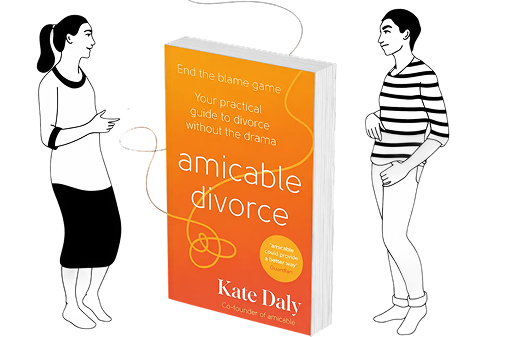
Comments (0)