
How to manage money when you move in together


Moving in together is one of the biggest changes a couple goes through, and it brings the question of money front and centre. How will you split the bills? What stays separate? Who pays for what when one of you earns more? Do you actually need a joint account?
There's no single right way to organise your money when you move in together. Couples in the UK tend to land somewhere on a spectrum between fully joint finances, fully separate accounts, or a mix of both. The right setup is the one that feels fair to both of you and reflects what you each contribute.
This blog covers the main approaches couples take, the conversations worth having early, how to keep the day-to-day running smoothly, and how to make the bigger picture clear, especially if you're not married.
Rather have a guided conversation? Our Living Together Planning Session is a 60-minute joint session with a Specialist, £210 inc VAT, for couples wanting to talk things through. Book a free 15-minute consultation to get started.
Why this conversation matters more than it used to
Cohabiting couples are the fastest-growing family type in the UK, according to the Office for National Statistics (2025). More people are moving in together earlier, without marrying, and combining homes and lives at different financial stages.
But the legal position hasn't caught up. There's no 'common law marriage' in England and Wales, even if you've lived together for decades. amicable's May 2026 survey found that 49% of UK adults still believe common law marriage exists. It doesn't. That means the money conversations you have now actually matter, because none of the assumptions you might be carrying are automatic.
Different ways couples handle money together
Couples usually land somewhere on a spectrum:
- Everything joint. One joint account, both salaries go in, all the bills come out of it. Simple to run, less flexible. Works well when incomes are similar and trust is high.
- Everything separate. Each of you keeps your own accounts and you settle shared spending as you go. More independent, more admin.
- A bit of both. Some couples keep their own accounts and add a joint account just for shared bills. Some keep everything separate and use a shared finance app to track who's contributed what. This middle ground is sometimes called 'yours, mine and ours'.
There's no right answer, just the version that feels fair to both of you. Some couples shift between these setups over time as their circumstances change, and that's normal too.
The conversations worth having early
Whatever setup you go for, it's worth talking through:
- What each of you brings into the relationship: salaries, savings, debts, any family support
- What's coming out of which account: bills, subscriptions, mortgage or rent
- How you'll contribute: equal split, in proportion to income, something else
- What happens if one of you puts in more, for the deposit, for renovations, for the bigger things you buy together. Will you write it down?
- What's just yours and what's shared, including holidays, dates, savings goals and days out
- What you'd want to happen if life changes, including if one of you moves out or your circumstances shift
These don't have to be one big sit-down conversation. They can build up over a few weeks. The point is that you both know where you stand and nothing gets stuck in the 'we assumed' zone.
How to keep the day-to-day running smoothly
Agreeing how you'll split things is one job. Actually running it week to week is another. The fewer times you have to do mental maths about money, the smoother things tend to feel, and there are now apps built to take that friction out.
We partner with Lumio, the UK money management app built specifically for couples. You both connect your existing accounts through open banking, so nothing gets replaced and each of you chooses what to share. Lumio then tracks your shared expenses, joint bills and subscriptions, keeps an IOU tally of who's paid for what and lets you set savings goals together. It works whether you have a joint account, separate accounts or a mix of both. There's a free version, and amicable customers get 50% off Couples Pro. Take a look at Lumio here.
How to make the bigger picture clear
Day-to-day is one thing. The bigger picture is another. What if one of you puts in more for the deposit? What if you move into one partner's home? What happens to the things you build together over time?
In England and Wales, unmarried couples don't have the legal rights that married couples have. There's no automatic right to a share of your partner's property, savings or pension, no matter how long you've lived together. You can read more on gov.uk's living together guidance.
So if you want what you've both agreed to actually hold, it helps to write it down.
A living together agreement (also called a cohabitation agreement) is a written record of what you've both agreed around the home, money and the practical side of life together. amicable's Cohabitation Agreement Service helps couples create one in a simple, joint process. We work with you both together, draft the agreement in plain English, and walk you through it so you both feel clear on what it says. Most couples find that having the conversation is the most useful bit, with the agreement as the proof you've had it.
A final word
You don't have to get it all right on day one. The couples we work with who feel the most settled are the ones who keep talking, keep adjusting, and know they've thought it through together.
Ready to put your plan in writing? Our Cohabitation Agreement Service is £800 inc VAT for both partners. We work with you both together and write your agreement in plain English. Book a free 15-minute consultation. No commitment, no pressure.
FAQs
Do you need a joint account when you move in together?
No, you don't need a joint account when you move in together. Most modern UK couples don't fully merge their finances into a single account. Many keep their own accounts and use a shared finance app or a joint account just for shared bills. The right setup is the one that feels fair and workable for both of you.
How should unmarried couples split bills?
There's no single right way. Some couples split equally. Some split in proportion to their income, so the higher earner pays a bigger share. Some keep a tally of who's paid for what and settle up. The fairest setup is the one you've talked through and both agreed on, and it can change over time as your circumstances change.
What is a cohabitation agreement?
A cohabitation agreement, sometimes called a living together agreement, is a written record of what you've both agreed about money, the home and day-to-day life together. In England and Wales, it's treated as a contract and gives unmarried couples clarity on contributions, ownership and how things will work. amicable's Cohabitation Agreement Service is £800 inc VAT for both partners and is drafted in plain English.
What are the legal rights of unmarried couples in England and Wales?
Unmarried couples in England and Wales have very limited automatic rights. There's no 'common law marriage', regardless of how long you've lived together. You don't automatically share property, savings or pensions with your partner. Most rights have to be set up actively, through wills, property paperwork or a cohabitation agreement. See gov.uk's guidance on living together for the full picture.
How do you have a money conversation with your partner?
Start with curiosity rather than conclusions. Ask what each of you brings, what's coming out of which account, and what would feel fair on the bigger things. Spread it across a few short conversations rather than one big sit-down. If you'd like a structured way to have it, amicable's Living Together Planning Session is a 60-minute joint session with a Specialist for couples wanting help working through it together.
Is a cohabitation agreement legally binding?
A cohabitation agreement is treated as a contract in England and Wales. The courts will usually honour it if it was entered into freely, both partners understood what they were signing, and the terms are fair. amicable drafts every agreement to meet those standards. We won't claim it covers every possible scenario, because no agreement does, but it's the clearest written record you can have of what you've both agreed.


Start your amicable journey
Speak to an amicable Relationships Specialist about moving in together.
Book a free 15-minute consultationYour guide to a kinder divorce
What if divorce didn’t have to be a battle?
In amicable divorce, Kate Daly offers compassionate, practical guidance to help you separate in a kinder, better way. Whether you’re just beginning, working through the practicalities or adjusting to co-parenting, this book meets you exactly where you are - and helps you move forward with confidence.
Order on Amazon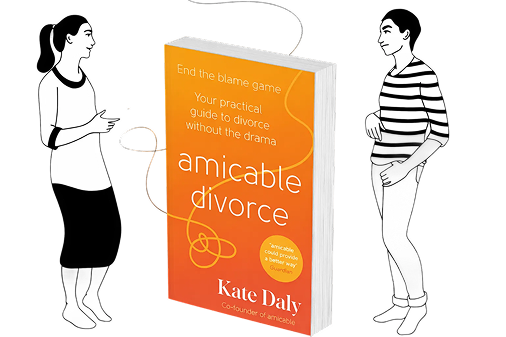
Comments (0)