
No-fault divorce: what it really means and what couples get wrong


No-fault divorce was introduced in England and Wales in April 2022, and allows you to end a marriage without blaming your spouse.
You simply state the marriage has irretrievably broken down. It doesn't speed up the timeline, automatically sort finances or resolve children arrangements – those still need to be agreed separately.
You've probably heard the term 'no-fault divorce' by now. But there's a lot of confusion about what it actually means in practice – and some misconceptions that can catch couples out. Here’s what you need to know.
What does no-fault divorce mean?
No-fault divorce means you can get divorced without having to prove your spouse did anything wrong.
Before April 2022, you had to give one of five reasons for divorce. One of those reasons was two years' separation (or five years if your spouse didn't agree). But if you hadn't been separated for that long, you had to blame your spouse for something – adultery, unreasonable behaviour or desertion.
This meant writing a list of allegations against your spouse. Even if you were both ready to divorce and wanted to be amicable, one of you had to be blamed, which often meant your ability to communicate and work together was already damaged before negotiations had even started.
Now, you simply state that the marriage has irretrievably broken down. No one has to be at fault.
What no-fault divorce doesn’t mean
It doesn't mean a quick divorce
Many people think no-fault divorce means you can get divorced quickly, but there's still a minimum timeline of around six months from applying for divorce to getting your final order which completes the process. This includes a mandatory 20-week reflection period between applying, paying your court application fee of £[[court_application]] and being able to apply for your conditional order, followed by a further six weeks and one day before you can apply for your final order.
So no-fault divorce might be simpler, but it's not faster than before.
It doesn't mean you don't need grounds
You still need grounds for divorce – you need to state that the marriage has irretrievably broken down.
The difference is you don't have to prove why it's broken down or blame anyone. You just have to say it has.
It doesn't mean your spouse can't respond
Your spouse still receives the divorce application and has to acknowledge it. They just can't contest the divorce itself.
Before 2022, your spouse could challenge your divorce petition, claiming the marriage hadn't broken down or disputing your allegations. This could drag the process out for months or even years.
Now, your spouse can't stop the divorce. They have to acknowledge they've received the application, but they can't block it or prevent the divorce from happening.
It doesn't mean finances are automatically sorted
This is a huge misconception. No-fault divorce only applies to ending the marriage itself. It has nothing to do with dividing money, property or pensions.
You still need to reach agreement on finances and get a consent order approved by the court. That process hasn't changed at all.
Some people think 'no-fault' means 'split everything 50/50 automatically.' It doesn't. Financial settlements are still negotiated based on needs, contributions and all the usual factors.
It doesn't mean arrangements for children are automatic
Similarly, no-fault divorce doesn't dictate anything about children arrangements.
You still need to agree where children will live, how much time they'll spend with each parent and how decisions will be made. No-fault divorce doesn't change any of this.
What has actually changed with no-fault divorce?
No more blame game
This is the biggest change. You don't have to list your ex-partner's faults or blame them for the breakdown.
This matters enormously for keeping things amicable. Previously, even couples who wanted to separate cooperatively had to start the process by one person formally accusing the other of bad behaviour.
That created conflict right from the start. It hurt feelings, created resentment and made negotiations harder.
Now, you can divorce without that initial accusation.
Joint applications are possible
Under no-fault divorce, you can apply jointly. Both of you submit the application together, agreeing that the marriage has broken down.
This wasn't possible before. One person always had to be the ‘petitioner’ (the one applying) and the other was the ‘respondent’ (the one responding).
Joint applications show you're approaching this together. It sets a cooperative tone from the beginning, which can make things much smoother.
No contesting the divorce
Your ex-partner can't stop the divorce by contesting it. If you say the marriage has broken down irretrievably, the court accepts that.
Previously, a spouse could contest, claiming the marriage was fine or disputing the allegations. This was rare but possible, and it delayed things significantly.
Now, if you want a divorce, you will get one. Your ex-partner might wish you weren't divorcing, but they can't legally prevent it.
Clearer timeline
The process is now more structured. After you apply, there's a mandatory 20-week reflection period. Then you can apply for your conditional order. Then six weeks and one day later, you can apply for your final order.
The timeline is clearer and more predictable than it was under the old system.
What hasn't changed since no-fault divorce was introduced?
Most of the divorce process is exactly the same as before.
You still need to provide the same information when applying.
You still pay the same court fee £[[court_application]] Check Gov.ukfor the current fee before applying).
You still go through the same stages: application, conditional order, final order.
You still need to sort out finances with a consent order, agree children arrangements and have the same legal duties around financial disclosure.
What are the most common mistakes people make with no-fault divorce?
Mistake 1: Thinking no-fault means you can skip the consent order
You need a consent order for your financial agreement to be legally binding. No-fault divorce doesn't change this.
Mistake 2: Assuming it's quicker than before
People often think that because no one is at fault, your divorce will be faster, but they all follow the same timeline. The mandatory 20-week reflection period applies regardless of how cooperative you both are.
Mistake 3: Thinking you don't need help
The divorce application might be simpler, but finances and children arrangements aren't. Most people still benefit from expert support like amicable.
See how we can help you with your divorce.
Mistake 4: Expecting your ex-partner to be more cooperative
Removing blame from the initial application can reduce conflict at the start of the process – and that genuinely matters. But it doesn't guarantee cooperation on finances or children arrangements. If your ex-partner wants to be difficult in negotiations, they still can be. That's where the right support makes a real difference.
Learn more about how to separate amicably.
Mistake 5: Not understanding the reflection period
The 20 weeks isn't optional. You can't speed it up even if you're both in agreement and desperate to move forward. It's built into the system.
Why no-fault divorce matters
The introduction of no-fault divorce in 2022 was a significant and positive change.
It removes the need to assign blame, reduces conflict at the start of the process and allows couples to approach divorce cooperatively rather than adversarially.
It recognises that marriages sometimes end, and ending a marriage doesn't require someone to be at fault.
For couples trying to divorce amicably, especially those with children who need to co-parent afterwards, this is hugely beneficial.
At amicable, we guide couples through no-fault divorce and everything that comes with it – from the application through to financial agreements and arrangements for children.
Book a free 15-minute consultation with us to discuss how we can help.
Frequently asked questions about no-fault divorce
Can my ex-partner stop a no-fault divorce?
No. Under no-fault divorce, your spouse cannot contest or prevent the divorce. They must acknowledge receipt of the application, but they have no legal grounds to block it. If you want a divorce, you will get one.
Does no-fault divorce affect my financial settlement?
No. No-fault divorce only ends the marriage itself. Dividing finances – including property, savings and pensions – is a separate process. You'll still need to reach an agreement and get a consent order approved by the court to make it legally binding.
Can we apply for divorce jointly?
Yes. One of the changes introduced in April 2022 is that couples can now apply jointly, submitting the application together. This wasn't possible under the old system, where one person always had to apply and the other respond.
How long does no-fault divorce take?
There's a minimum timeline of around 26 weeks from application to final order. This includes a mandatory 20-week reflection period before you can apply for your conditional order, followed by a further six weeks and one day before your final order. You can't shorten this, even if you're both in full agreement.
Do I still need a consent order if we agree on everything?
Yes. Even if you and your ex-partner have agreed on how to divide finances, a consent order is still required to make that agreement legally binding. Without one, either of you could make a financial claim against the other in the future. No-fault divorce doesn't change this.

Your guide to a kinder divorce
What if divorce didn’t have to be a battle?
In amicable divorce, Kate Daly offers compassionate, practical guidance to help you separate in a kinder, better way. Whether you’re just beginning, working through the practicalities or adjusting to co-parenting, this book meets you exactly where you are - and helps you move forward with confidence.
Order on Amazon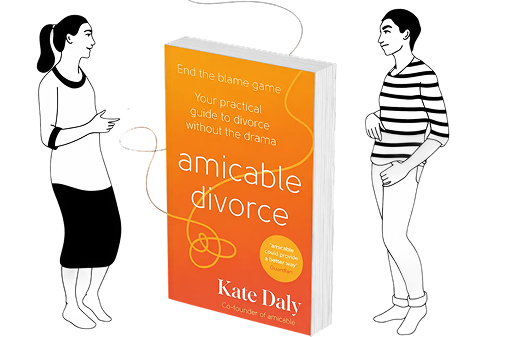
Comments (0)