
Separation agreements in England & Wales: what they cover and when to use one


A separation agreement is a written document that sets out what you and your ex-partner have agreed when you separate. It covers how you'll divide your finances and assets, what happens to your home and how you'll share parental responsibility if you have children.
At amicable, we help couples put their separation agreement together without the need for solicitors – so the process stays straightforward for both of you.
Deciding to separate from your partner is one of the biggest decisions you'll ever make. And once you've made it, there's a lot to figure out: where you'll each live, what happens to your money and home, how you'll co-parent your children.
A separation agreement can help you get all of that down in writing, clearly and fairly, so you know exactly what’s been agreed for the future. Here's what you need to know.
What is a separation agreement?
A separation agreement is a written agreement that sets out your financial arrangements during and after your separation. It covers:
- who pays the mortgage, rent and bills
- who continues to live in the family home, or whappens if it’s sold
- what happens to any debt
- what happens to savings, investments and other finances
- childcare arrangements
You don't need to be married or in a civil partnership to use a separation agreement, and you don't need to go through the courts either.
A separation agreement works for married couples, civil partners and people who've been living together.
What does a separation agreement cover?
Every separation is different, so your agreement will be tailored to your situation. But most separation agreements cover some or all of the following:
Your finances
This includes how you'll split savings, debts, pensions and any other financial assets. You can also agree on whether one person will pay the other spousal maintenance, and for how long.
Note: A pension sharing order can only be applied for with a consent order. You cannot share pensions with a separation agreement. Learn more about consent orders here.
Only married couples or civil partners can have a pension sharing order, it is not an option for cohabiting couples.
Your home
If you own a property together, your separation agreement sets out what happens to it. Will one person buy the other out? Will you sell and split the proceeds? Or will one of you stay in the home until the children are older?
Your children
You can include a parenting plan in your separation agreement. This covers where your children will live, how much time they'll spend with each of you and how you'll make important decisions about their lives. If you agree on child maintenance, that can go in here too.
Your belongings
Cars, furniture, jewellery, anything that has a significant value - your agreement can record who gets what, so there are no disputes further down the line.
Is a separation agreement legally binding?
A separation agreement isn't automatically legally binding in England and Wales. But that doesn't mean it isn't worth having.
A well-drafted agreement, signed by both of you, carries real weight. Courts will take it seriously if a dispute ever arises.
If you want your financial arrangements to be fully legally binding, you'll need a consent order – a court-approved document that makes everything official. A consent order is only available as part of a divorce or dissolution – so if you decide to do this at a later date, your separation agreement can form the basis of that consent order.
If you're not married, a consent order isn't an option – which is one reason a separation agreement is especially important for cohabiting couples.
When should you use a separation agreement?
You're not ready to divorce yet
In England and Wales, you need to have been married for at least one year before you can apply for a divorce. A separation agreement lets you sort out the practical details while you wait.
You don't want to divorce
Some couples choose to separate permanently without ever divorcing – perhaps for religious or personal reasons. A separation agreement gives you both clarity without going through the courts.
You're not married
If you've been living together, you don't have the same legal protections as married couples. A separation agreement is often the best way to record what you've agreed and protect you both.
You want to keep things straightforward
Going to court is expensive and stressful. A separation agreement combined with a consent order lets you resolve things between yourselves without involving a judge who gets the final say in how you divide things.
How do you put a separation agreement together?
The best separation agreements come from both people working together – not from one person instructing a solicitor to write something that the other then has to challenge.
Here's how the process typically works:
1. List everything you need to agree on
Start by making a clear picture of your finances – your income, savings, debts, pensions and any property you own together. If you have children, think about the practical arrangements you'll need to put in place.
2. Have the conversations
Work through each area together and agree on what feels fair. This might take more than one conversation, and that's normal. If you're finding it hard to reach agreement, a Separation Specialist can help you work through the sticking points.
3. Get it written up
Once you've agreed, your separation agreement needs to be written up clearly and accurately. It should reflect exactly what you've both agreed – nothing more, nothing less.
4. Get legal support
Get the agreement reviewed by a legal professional before signing. This protects you both and means the agreement is more likely to be taken seriously if it's ever challenged.
5. Sign the agreement
Once you're both happy, you both sign the agreement. It's also a good idea to have it witnessed.
Key takeaways
A separation agreement sets out how you’ll split your house, finances and other valuables
You don’t have to be married to have a separation agreement
Separation agreements aren’t legally binding, but consent orders are
Separation can be difficult, but sorting out the practicalities doesn't have to be. A separation agreement gives you and your ex-partner a clear, fair record of the decisions you've made, so you can both move forward with confidence.
At amicable, we help couples negotiate and write their separation agreement together. Our Separation Specialists guide you through the process, so both of you understand what you're agreeing to and feel confident moving forward.
If you'd like to find out more, book a free 15-minute advice consultation with one of our Specialists. We'll help you understand your options and figure out the best way forward for your situation.
FAQs about separation agreements
If we’re not married, do we need a separation agreement?
You don’t need a separation agreement if you aren’t married. But if you do have a shared home, shared finances or children you care for, a separation agreement can help outline how you’ll handle all of those things, so you don’t get drawn into arguments about it in the future.
How is a separation agreement different from a consent order?
A separation agreement is for anyone – married, in a civil partnership, or cohabiting – and is not legally binding.
A consent order is only for married couples or civil partners going through a divorce or dissolution, and once it is approved by the court, it is legally binding. Cohabiting couples cannot apply for a consent order, which is one reason a separation agreement is especially important if you're not married.
What goes into a separation agreement?
Every separation agreement is different, and yours should be tailored to your situation. If you have no property together, but have had joint finances for years, your separation agreement will focus on how you’re splitting those finances.
Can a separation agreement be used later in a divorce?
Yes. If you later decide to divorce, your separation agreement can form the basis of a consent order – the legally binding document that finalises your financial arrangements as part of the divorce process. Having a clear, well-drafted separation agreement in place makes that step more straightforward.

Your guide to a kinder divorce
What if divorce didn’t have to be a battle?
In amicable divorce, Kate Daly offers compassionate, practical guidance to help you separate in a kinder, better way. Whether you’re just beginning, working through the practicalities or adjusting to co-parenting, this book meets you exactly where you are - and helps you move forward with confidence.
Order on Amazon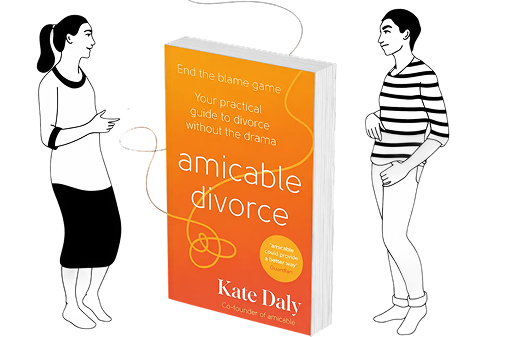
Comments (0)