
Separating in your 50s and 60s: what’s different


It's completely normal to feel disorientated if you're separating at this stage. When you have built a life together over decades, the identity shift can feel seismic.
However, separating later in life can also mean you have clearer self-knowledge, stronger friendships and often the ability to be firmer about what you need going forward.
In this guide, we look at what’s involved in separating at this stage, who you should tell and practical first steps to gently start the process.
What feels different at this stage
Separating in your 50s or 60s can mean that your children are grown, which simplifies logistics, but your decades-long identity as a couple runs deep. You've built a life woven through countless decisions and unpicking that can take emotional work.
Financially, this stage also carries weight as your pension is likely to be your biggest asset, with less earning time ahead to rebuild so it’s important to get the financial order right.
Separating later in life isn't about starting from scratch but starting again with more wisdom.
Who am I now?
This is a question that often hits hardest at this age when your identity has been connected to your partner or as a parent. If your children are independent, separation can be particularly hard as you can feel that you are losing a major part of yourself.
Remember that you're not losing yourself but instead shedding a role and discovering who you want to be next. Many people at this stage find that separation, painful as it is, becomes a gateway to reclaiming interests and friendships they'd set aside.
Rebuilding your life after divorce isn't just about logistics but about reconnecting with yourself.
Practical first steps: the essentials
Take your time to adjust and don’t rush to make decisions but if you’re unsure how to move forward, here are some practical steps:
- Get clear on your housing situation. Deciding who stays, who goes or if the house is sold is often the first financial conversation.
- Gather your financial documents. Start to pull together bank statements, pension statements, property deeds and insurance policies.
- Sort your finances before you apply for the final order that ends the marriage. If either of you remarries before the finances are sorted, the other person can be barred from making certain financial claims (the remarriage trap). A Divorce Specialist can explain what a consent order or financial remedy order could mean for you.
- Think about practical arrangements if you share a home and need to stay in it. Consider how you can live separately under the same roof whilst you sort things out.
Who do you tell and when?
If you have adult children, they'll need to know eventually but give yourself time and get support before you have to manage their feelings too.
If you have younger children still at home, it’s important to think carefully about how and when to tell them. Telling the kids: how to start the separation conversation and also In brief: Divorce with adult children can thoughtfully walk you through both situations.
You might want to tell friends, and many people find that close friendships become even more valuable during this time. You may also want to talk to colleagues - our guide to telling your employer about your divorce has practical advice to help.
The money conversation
If you’ve built a shared financial life over decades, 'who gets what' can feel complicated because money isn't really the point but what it represents (security, fairness, who matters).
Courts generally look at the whole picture when dividing assets, for example:
- What each person needs - such as housing, especially if children live with you
- Current incomes and each person’s earning capacity
- Your ages and the length of the marriage
- Pensions and what each person contributed - this often needs expert input
- Your financial and non-financial contributions, such as home-making/childcare
- The welfare of the children.
Most people can agree to a financial settlement without a court hearing, which a consent order makes legally binding.
What comes next for you
The marriage or separation doesn't define this stage of your life and it’s what comes next that shapes it. Separating at this age can feel like a detour, but many people find it's a new path towards something truer.
Let yourself grieve what's ending and give yourself permission to be curious about what's beginning.
Helpful tools and support
Articles
Essential guide: Consent orders
Finding your way through loneliness after separating
Webinars
Rebuilding your life after divorce practical first steps
Telling the kids: how to start the separation conversation
Podcasts
In brief: Divorce with adult children
The psychology of heartbreak at any age
Support
amicable space community forum - connect with others navigating separation and divorce at any age
As an amicable space member, you can also book a free 30-minute consultation with an amicable Divorce Specialist.

Your guide to a kinder divorce
What if divorce didn’t have to be a battle?
In amicable divorce, Kate Daly offers compassionate, practical guidance to help you separate in a kinder, better way. Whether you’re just beginning, working through the practicalities or adjusting to co-parenting, this book meets you exactly where you are - and helps you move forward with confidence.
Order on Amazon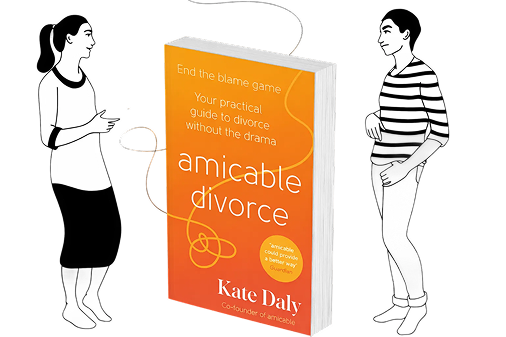
Comments (0)