
Pension sharing vs offsetting in divorce: which option works for your family?


When you divorce in England and Wales, pensions are part of the financial settlement, just like property or savings. There are two main ways to deal with them: pension sharing, where part of one person's pension is transferred to the other, and pension offsetting, where the pension stays untouched and the other person receives something else of roughly equal value instead, for example, a larger share of the home. The right option depends on your circumstances, and it's worth working this out together before either of you makes a final decision.
Pensions are often one of the biggest assets a couple owns, and one of the most confusing to deal with when you separate. You might be wondering whether the pension has to be split, who gets what, and whether there's a way to keep things simple.
This guide explains the two main options. By the end, you'll know what pension sharing and pension offsetting mean, when each one tends to suit people better, and how amicable can help you reach an agreement together.
How are pensions dealt with in a divorce?
In England and Wales, pensions built up during a marriage are usually treated as a shared asset, even if only one of you was paying into them. That doesn't mean they're split automatically. The two of you, ideally with some professional support, decide how to deal with them as part of your overall financial settlement.
There are three main approaches: pension sharing, pension offsetting and pension earmarking. Earmarking (also known as an attachment order) is often unreliable because events between making the order and it starting to be paid out, and even after it starts to be paid out, mean you can't guarantee how much income you'll get from it, and it prevents you from having a complete clean break because you're still linked through the pension. Events like the paying person dying, remarrying, or taking money out of the pension will change the amount received or stop it being paid. It also means the receiving person only gets their share on the terms under which the other person takes their pension, so there is very little certainty about when and how much will be paid.
Pension sharing and offsetting will allow you to have a clean break on pensions as soon as the order is made.
What is pension sharing?
Pension sharing means part of one partner's pension fund is transferred to the other partner's pension, either an existing one or a new one set up for this purpose. The amount transferred is called a pension credit. The person giving up part of their pension gets a pension debit, which reduces their fund.
Once the transfer is made, both pensions are completely separate. What happens to each fund from that point on is entirely independent.
What is pension offsetting?
Pension offsetting means the pension stays with whoever built it up. To balance things out, the other person receives more of another asset instead, usually a larger share of the family home or a bigger lump sum from savings.
No money moves between pension funds. The settlement is reached by comparing the value of the pension against the value of the other assets and agreeing a swap.
What does pension offsetting mean in practice?
Here's an example. Say one of you has a pension worth £100,000 and the other has none. If you choose offsetting, the person without the pension might keep a larger share of the home to make up for not receiving any pension. The pension stays untouched and the home equity compensates for the difference.
Offsetting can feel like a more straightforward option on paper. There's no need to involve the pension provider, no pension sharing annex to prepare, and no formal pension credit transfer. But it does mean one of you ends up without pension savings, which can make a big difference later in life.
Why the valuation matters so much
Before you can compare a pension against other assets, you need to know what the pension is actually worth in today's terms. For a defined contribution pension (sometimes called a money purchase pension), this is usually the current fund value. For a defined benefit pension (also called a final salary scheme), it's more complex. You'll need a cash equivalent transfer value, often called a CETV, which is a figure the pension provider calculates to show what the pension would be worth as a lump sum today.
A CETV can sometimes understate what a final salary pension is really worth, particularly for public sector schemes such as teachers' or NHS pensions. In those cases, a specialist, sometimes called a pension on divorce expert or PODE, may need to review the figures before you can make a fair comparison. amicable is partnered with Octopus Money on the PODE product.
Pension sharing vs offsetting: which is better?
There's no single right answer. The better option depends on your ages, your other assets, your housing situation and what each of you needs going forward.
The table below sets out the key differences.
| Pension sharing | Pension offsetting | |
|---|---|---|
| What happens to the pension | Part is transferred to the other person's pension | Stays with whoever built it up |
| What the other person receives | A pension credit in their own fund | A larger share of another asset, often the home |
| Clean break | Yes, pensions are fully separated | Yes, if agreed as part of the overall settlement |
| Paperwork involved | pension sharing order plus pension sharing annex, filed with the pension provider | No pension documents needed beyond the consent order |
| Best suited to | Couples where one person has little or no pension of their own; couples who want a genuinely equal retirement position | Couples where keeping the family home matters most; couples where the pension and other assets are closer in value |
| Things to consider | Takes time to process; some pension providers charge a fee | One person may end up with no pension provision; requires an accurate valuation to work fairly |
When does pension sharing tend to suit people?
Pension sharing often makes sense when there's a significant gap between what each of you has in pension savings, and where one person would otherwise reach retirement with very little. It's particularly worth considering if:
- you're in your 40s or 50s and there isn't enough time to build a new pension from scratch
- one of you took time out of work to care for children and has a much smaller pension as a result
- the pension is the main asset and there isn't enough equity in the home to offset it meaningfully
A pension credit gives the receiving person their own independent fund. It grows separately from that point on and isn't affected by what happens to the other person's pension.
When does pension offsetting tend to suit people?
Offsetting can work well when keeping the family home is the priority, particularly where children are living there and moving would cause disruption. It may also suit couples where:
- the difference in pension values is relatively small
- one person already has their own pension savings and the gap is manageable
- the home has enough equity to make the offset fair and realistic
The important thing is that both of you go into this with a clear picture of what the pension is actually worth. Offsetting based on an inaccurate figure isn't a fair outcome for either of you.
Should you sort this out together?
Yes, and it leads to a kinder outcome for your family when you do. When each person instructs a separate solicitor, pension discussions can become drawn out and expensive. Positions can harden before anyone has properly explored what works for the family.
Working through this together, with support from a Divorce Specialist who understands both the legal and financial side, means you can look at the full picture: the pension, the home, savings and any other assets, and find an arrangement that makes sense for both of you, including any children.
amicable's Negotiation Services include support with financial settlements. If pensions are involved, your Divorce Specialist can talk you through what information you need to gather and, where relevant, refer you toa pension specialist for a formal valuation.
What's the process for dealing with pensions in divorce?
Whether you choose sharing or offsetting, there are steps you'll need to follow to make your agreement legally binding.
- Get the pension valued. Request a CETV from the pension provider. For final salary schemes, consider whether you need a PODE report before comparing values.
- Share your financial information. Both of you need to set out your full financial picture, including all pensions, property, savings and debts. This is a legal requirement, not an optional step.
- Agree an approach together. Decide whether sharing or offsetting works better for your circumstances. A Divorce Specialist can help you weigh this up.
- Get the agreement drawn up. Your financial agreement needs to be made into a consent order and approved by a judge to become legally binding. Without this step, either of you could make a financial claim against the other in future, even after the divorce is finalised.
- File the consent order with the court. This is done as part of, or after, your divorce application. The judge reviews it to check it's fair. You don't usually need to attend court.
- Implement the pension decision. If you've chosen pension sharing, the consent order will include a pension sharing order and a pension sharing annex. These are sent to the pension provider, who carries out the transfer. There may be a fee for this, charged by the provider.
FAQs
Can we offset the pension against the house without going to court?
You can agree this between yourselves, but the agreement only becomes legally binding once a judge has approved a consent order. Without a consent order, there's no formal record of what was agreed and either of you could make a financial claim later.
What is a CETV and do we need one?
A CETV, or cash equivalent transfer value, is the figure your pension provider gives to show what your pension would be worth as a lump sum today. You'll need one to compare the pension against other assets fairly, whether you're sharing or offsetting.
How long does pension sharing take after a consent order is approved?
This varies by pension provider. Some process pension credits within a few weeks; others take several months. It's worth asking your pension provider for an estimate early in the process so you're not caught out by the timeline.
Do we both need separate legal advice on the pension?
You don't each need a separate solicitor. A Divorce Specialist at amicable can help you reach an agreement together; they'll also tell you when a pension specialist's input would help. If your pension is valuable or complex, you might need the PODE report to help you understand your options better.
What happens to a pension if we don't include it in the financial settlement?
If you divorce without a consent order, pension claims don't disappear. Either of you could make a claim against the other's pension in future, even years later. Including pensions in your consent order and getting it approved by a judge is the only way to draw a proper line under this.
Is pension offsetting taxed differently from pension sharing?
The transfer itself under a pension sharing order isn't taxed at the point of transfer. With offsetting, because no pension money moves, there's no transfer to tax. However, how each pension is taxed when you eventually draw it depends on the type of pension and your circumstances at that time. It's worth taking independent financial advice if you're unsure.
Ready to work out your pension settlement together?
Pensions don't have to be the hardest part of your divorce. With the right information and the right support, you and your ex-partner can reach an agreement that works for both of you and gives you both a clearer picture of your financial future.
Book a free 15-minute call to talk through your situation with a Divorce Specialist.


Start your amicable divorce journey
Speak to an amicable Divorce Specialist to understand your options and next steps for untying the knot, amicably.
Your guide to a kinder divorce
What if divorce didn’t have to be a battle?
In amicable divorce, Kate Daly offers compassionate, practical guidance to help you separate in a kinder, better way. Whether you’re just beginning, working through the practicalities or adjusting to co-parenting, this book meets you exactly where you are - and helps you move forward with confidence.
Order on Amazon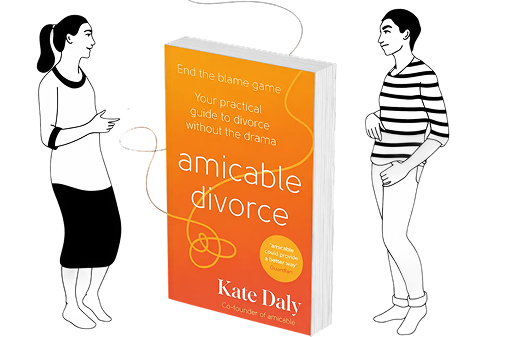
Comments (0)