
Is it ever right to get back with your ex?


Wondering whether to give things another go with your ex-partner is one of the hardest places to be, and there’s no single right answer. You might feel hopeful one day and certain that the relationship is over the next. That's completely normal, and you don't have to have it all worked out today. This guide walks you through the questions worth asking, the signs to watch for and where to find support while you decide.
We also have a video on navigating relationships and separation that you might find helpful:
Is it normal to want to get back with your ex?
Yes. Missing someone you've shared a life with is a natural part of separation, not a sign you've made a mistake.
Doubt tends to surface most strongly in the early weeks after the breakup, when the change still feels raw, but it often softens with a bit of time and space. Wanting your ex-partner back can mean you still love them – or it can mean you miss the routine, the home or the family life you built together. Those are different things, and it helps to know which one you're feeling.
It's also worth remembering that you and your ex-partner may be at different emotional stages. The person who first suggested separating has usually had longer to process it. If that's you, your ex-partner may need more time before they can talk calmly. If it's them, you might still be catching up.
Learn more about the different emotional stages of separation.
What are good reasons to get back together?
Healthy reconciliation is built on genuine change, not fear of being alone.
Good signs include both of you understanding what went wrong and being willing to do something about it. You're talking honestly rather than papering over the cracks.
Reconciling for the right reasons often looks like this:
- You've each taken responsibility for your part in the difficulties
- You can talk about the hard topics without it turning into an argument
- You both want to be together, freely and without pressure
- You're prepared to get support, such as couples counselling, to rebuild trust
What are the warning signs it's not the right move?
If the pull to reconcile comes from fear, guilt or pressure, it's worth pausing before you act on it.
Be cautious if nothing about the situation has changed, or if you're only going back because life apart feels daunting. Loneliness, money worries and exhaustion are powerful – but they're not necessarily good reasons to get back together if things haven’t worked out the first time.
A note on safety:
This guide is for people whose relationship was safe and who can talk things through constructively. If your relationship involved abuse, coercive control or you felt unsafe, your wellbeing comes first – and returning isn't a decision to make alone.
You can find confidential support from Women's Aid, Refuge, the Men's Advice Line or the ManKind Initiative. If you're ever in immediate danger, call 999.
How do you decide whether to get back with your ex?
There's no formula, but a calm, step-by-step approach is generally better than deciding in the heat of the moment. Give yourself permission to take your time.
Name what you're really missing
Be honest about whether it's the person or the life you shared. Have you missed them, or the house, the routine and the safety of the relationship?
Look at what's changed
Ask what would be different this time, and whether that change is real or hoped for. If things haven’t changed significantly, it’s unlikely getting back together will have a different outcome this time.
Picture six months ahead
Imagine staying apart, and then imagine going back. Notice which feels more right for you.
Talk to someone you trust
A friend, a counsellor or a Divorce Specialist can help you see it clearly.
Get in touch with us for a free consultation.
Have an honest conversation with your ex-partner
Share how you’re feeling without making promises you're not sure of. You might feel differently after speaking to them.
Decide together, without pressure
A choice made calmly is far more likely to hold. A spur of the moment decision can feel exciting, but the reality is that relationships are difficult, and take real work.
What if you've started a divorce but you’ve changed your mind?
Starting a divorce doesn't lock you in. The process is designed to give you time to be sure.
In England and Wales, the law builds in a 20-week reflection period between your divorce application and the conditional order. It exists precisely so couples can pause, reflect and reconcile if they choose to. You're never forced to keep going – if you decide to get back together, you can simply choose not to apply for the conditional order or final order, and you can ask the court to stop the application.
And if you do decide separation is right, doing it kindly protects everyone – especially the children. Our Guided or Complete Negotiation Service helps couples reach fair agreements together, without the cost and conflict of separate solicitors.
Where to get support if you’re unsure about getting back together?
You don't have to work this out on your own. Talking to the right person can bring real clarity.
Couples counselling can help you both understand what happened and whether it can change.
For one-to-one support and a community who understand, amicable space gives you a place to think things through. You can also hear honest stories of separation and reconciliation on The Divorce Podcast.
Frequently asked questions about getting back with your ex
Is it normal to want to get back with your ex after separating?
Yes, completely. Missing your ex-partner, especially in the early weeks, is a natural part of adjusting to change. It doesn't always mean reconciliation is right – but it's nothing to feel guilty about.
How do you know if getting back together is a good idea?
Look for genuine change and shared willingness, not fear of being alone. If you both understand what went wrong, can talk honestly and want the relationship for itself, that's a much healthier starting point.
Can you stop a divorce if you decide to get back together?
Yes. You're never forced to continue. If you reconcile, you can choose not to apply for the conditional order or final order, and you can ask the court to stop the application. A Divorce Specialist can talk you through the options.
Should we try counselling before deciding?
For many couples it helps. Counselling gives you a calm, neutral space to understand what happened and whether things can change – which makes any decision, together or apart, a clearer one.
My ex wants to get back together but I'm not sure. What should I do?
Take your time and don't feel pressured. Be honest about where you are rather than agreeing to keep the peace. A choice made calmly, without pressure on either side, is far more likely to last.

Your guide to a kinder divorce
What if divorce didn’t have to be a battle?
In amicable divorce, Kate Daly offers compassionate, practical guidance to help you separate in a kinder, better way. Whether you’re just beginning, working through the practicalities or adjusting to co-parenting, this book meets you exactly where you are - and helps you move forward with confidence.
Order on Amazon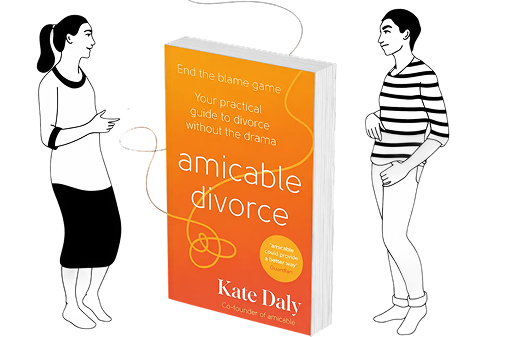
Comments (0)