
LGBTQ+ divorce and separation: what you need to know


If you're an LGBTQ+ person thinking about divorce or separation in England and Wales, the process is broadly the same as for any couple – but the emotional experience can be different.
Research from amicable shows LGBTQ+ couples are more likely to separate without conflict and at a lower cost, yet they often carry a heavier emotional load and are less likely to use specialist support.
Thinking about separating as an LGBTQ+ couple?
Ending a relationship is never easy. But if you're part of the LGBTQ+ community, you may feel there are fewer spaces that truly understand your experience – from the practicalities of divorce or dissolution to the emotional weight of it all.
The good news is that more people are finding kinder, more affordable ways to separate.
What's the difference between divorce and dissolution?
The legal process depends on the type of relationship you're ending.
- Divorce applies to married couples
- Civil partnership dissolution is the equivalent process for civil partners
- Separation applies to couples who were cohabiting but not legally married or in a civil partnership
The legal steps for divorce and dissolution in England and Wales are largely the same. You'll apply for a divorce application or dissolution, move through a conditional order and then receive a final order to legally end the relationship.
If you're separating without being married or in a civil partnership, the process is different – there's no formal legal process to 'end' the relationship itself, but you may still need to sort out finances, property and any arrangements for children.
How does LGBTQ+ separation compare to other couples?
New research from amicable surveyed 2,000 people who had divorced, dissolved a civil partnership or separated in the last 10 years. The findings are both encouraging and thought-provoking.
The positives:
- 58% of LGBTQ+ respondents described their separation as amicable, compared to 54% of straight couples
- 45% said their separation cost them nothing at all, versus 30% of straight people
- 56% handled their separation themselves, compared to 41% of straight couples
The harder reality:
- 44% of LGBTQ+ people experienced anxiety or panic during their separation, versus 31% of straight people
- 42% felt lonely or isolated
- 38% felt anger or resentment – both notably higher than for straight couples
LGBTQ+ people were more likely to seek therapy and GP support during separation. Yet just 4% used a couples' legal and negotiation service like amicable, compared to 9% of straight couples.
Going it alone can mean missing out on support that helps the whole family – not just in the short term, but for years to come.
Why do so many LGBTQ+ people separate without specialist support?
There are a few reasons this might happen.
Many separation services have historically been built around a heteronormative framework. If you've had to explain your relationship from scratch every time you seek help, it's understandable that you'd avoid it altogether.
There can also be a strong instinct toward privacy – particularly for people whose relationships carry the weight of everything they went through to have them. Coming out, fighting for equal rights, building a family in the face of barriers: for some, a separation feels too personal to share outside a trusted circle.
None of this means you have to go it alone. In fact, the right support can make a real difference.
What does separating kindly look like?
Whether you're married, in a civil partnership or co-habiting, separating well involves the same core stages.
Have an honest conversation
Talk to your ex-partner about what you both want the process to look like. Agreeing to keep things constructive is the single most important step.
Get clear on what needs to be decided
You may need to decide on splitting up your finances, property, any arrangements for children or shared responsibilities.
Explore your options
You can do divorce yourselves, or use a service like amicable that helps you negotiate together without needing solicitors.
Make your agreements legally binding
A consent order (for finances on divorce or dissolution) or a separation agreement (for unmarried couples) protects both of you long term.
Start the legal process
If you're married or in a civil partnership, you'll need to apply to end it formally.
Do same-sex couples face any different legal considerations when getting divorced?
In most respects, the law in England and Wales treats same-sex and opposite-sex couples the same when it comes to divorce, dissolution and financial settlement. The principles for dividing assets, agreeing on arrangements for children and making things legally binding are broadly the same.
There are some areas where specific circumstances may be relevant – for example, if you have children through donor conception, surrogacy or adoption, the legal arrangements around parental responsibility can be more complex. A Divorce Specialist can help you understand what applies to your situation.
What support is available for LGBTQ+ people going through separation?
You don't have to piece this together alone. There are a few different types of support worth knowing about.
For the legal and financial side: amicable helps couples separate together in England and Wales – negotiating fair financial agreements and sorting the legal process without putting you on opposite sides. Our Divorce Specialists work with all couples, and you'll never have to explain yourself from scratch.
For the emotional side: Our research found that LGBTQ+ people going through separation are more likely to seek therapy and counselling. amicable space is our online membership community where you can get expert guidance, connect with others going through separation and access resources that help you process both the emotional and practical sides of what you're going through.
For LGBTQ+-specific support: Organisations such as Stonewall and Switchboard offer community signposting and can help you find services that understand your specific experience.
Separation is hard. But the data shows that LGBTQ+ couples are already doing something right – choosing kinder, lower-conflict ways to part. The challenge is making sure you don't have to shoulder that alone.
Whether you're just starting to think about separation or you're ready to take the next step, amicable is here to help you do it well – for you, your ex-partner and your whole family.
Ready to take the next step? Book a free 15-minute consultation with one of our Divorce Specialists to talk through your options.
Not quite there yet? Join amicable space – our expert community for anyone navigating separation, at whatever stage you're at.
FAQs about LGBTQ+ divorces
Can same-sex couples get divorced in England and Wales?
Yes. Same-sex marriage has been legal in England and Wales since 2014, and the divorce process is the same as for opposite-sex couples. You'll apply for a divorce application, receive a conditional order and then a final order to legally end the marriage.
What is civil partnership dissolution?
Civil partnership dissolution is the legal process for ending a civil partnership. It follows the same stages as divorce – application, conditional order and final order – and the same principles apply to sorting finances and any children's arrangements.
Do I need a solicitor to get divorced or dissolve a civil partnership?
No. Many couples in England and Wales now choose to separate without using individual solicitors on each side. Services like amicable help you navigate the legal process together, which is often simpler, kinder and more affordable.
What happens to finances and property when an LGBTQ+ couple separates?
The same principles apply as for any couple. You'll need to reach an agreement about how to divide assets, property, pensions and any other shared finances. To make that agreement legally binding, you'll need a consent order (if you're divorcing or dissolving a civil partnership) or a separation agreement (if you weren't married or in a civil partnership).
What if we have children from donor conception or surrogacy?
Arrangements for children's time and parental responsibility are decided separately from the divorce or dissolution itself. If your children came through donor conception, surrogacy or adoption, it's worth getting specific advice about parental responsibility – a Divorce Specialist can help you understand your situation.
Is amicable right for LGBTQ+ couples?
Yes. amicable works with all couples in England and Wales who want to separate constructively, without conflict. You don't need to explain your relationship history from the beginning – our Divorce Specialists are here to help you move forward.
.webp)
Your guide to a kinder divorce
What if divorce didn’t have to be a battle?
In amicable divorce, Kate Daly offers compassionate, practical guidance to help you separate in a kinder, better way. Whether you’re just beginning, working through the practicalities or adjusting to co-parenting, this book meets you exactly where you are - and helps you move forward with confidence.
Order on Amazon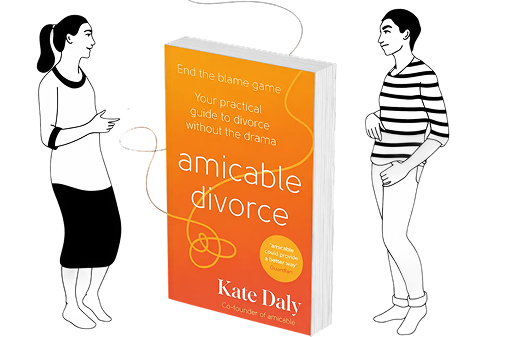
Comments (0)