
The impact of unhealthy relationships on children


If you’re struggling with whether to stay in a difficult relationship or leave for the sake of your children, you’re not alone, and your concern for your children’s wellbeing already shows you’re a loving parent.
No relationship is completely free from conflict, and all parents will argue in front of their children sometimes. That’s normal, and can actually be a good thing, as it can help your child understand healthy ways of resolving disagreements.
However, if you’re arguing constantly or in a very hostile way, you might be in an unhealthy relationship . Many parents stay together even in deeply unhappy relationships, out of fear that a separation would harm their children emotionally.
However, staying in an unhealthy relationship, what many people call ‘staying together for the kids,’ can in fact cause more harm than good.
We’ve written an article on the difference between healthy and unhealthy relationships here, but this article will look at the impact staying in an unhealthy relationship can have on children as they grow up.
Growing up with two parents at home doesn’t guarantee a healthy childhood. Research from the Children’s Commissioner has shown that sometimes separation might be the better option for children where there’s a high level of conflict:
“The impact of parental separation depends on the level of parental conflict. Studies have shown that where parental conflict was high, young adults had better outcomes if their parents separated” - Family Review (2022), Children’s Commissioner
Let’s look at how unhealthy relationships can affect children.
How unhealthy relationships impact children
They blame themselves
Even at a young age, children are very perceptive. They notice and react negatively to parental disagreement and conflict. Even if you try to act like things are fine in front of your children, they can pick up words, tone and body language.
At this early stage, their psychology isn’t developed enough to separate themselves from exterior events, so often a child will mentally put themselves into situations that have nothing to do with them. Unfortunately, this means that when their parents are unhappy, the child will often blame themself , even without realising it.
This can go on to damage their self-esteem over time, negatively changing how they view themselves and the world around them.
They learn unhealthy patterns
Children learn models of relationships and behaviour from their parents. It’s completely natural, and happens without thinking.
If all they’re shown throughout their childhood is an unhappy relationship with unhealthy behaviours, they’ll likely go on to repeat this pattern in their own relationships. They’ll learn to shout, go silent or argue, copying the behaviours they’ve seen over the years. And it can take years of hard work to unlearn these behaviours.
They expect and accept unhealthy relationships as normal
When you stay in an unhappy relationship, your children see that you’re unhappy but aren’t taking action to change the situation.
If you’re able to leave an unhappy relationship, it can be a powerful signal to your children not to settle for less. Even if the transition is a challenge, it can show your children that change is possible, and can be better for everyone involved.
It can hinder their development
Lastly, studies have shown that living in an unhappy home can hinder children’s cognitive and social development. Children who do not have healthy attachments are generally more vulnerable to stress, and can have trouble controlling and expressing their emotions.
When a child grows up afraid or under constant stress, the development of their brain and nervous system can be impaired, which over a long period of time can put a serious strain on the body.
These negative effects can last a lifetime, so it’s best to protect your child from unhealthy relationships as much as possible. Below are some ways you can do this.
How to protect your child from unhealthy behaviour
Watch your own behaviour
The best way to protect your child from unhealthy behaviour is to be a good role model to them yourself. Ideally both you and your partner will agree to try your best to set a good example.
Talk to your partner directly and respectfully, even when they’re being difficult, and this gives your child a healthy model for resolving conflict. Be consistent and reliable with your child, showing them that they’re important to you.
Communicate with your child
If things are difficult, don’t try to hide things from your child. Talk to them, let them know what is happening and why.
Without an explanation, children will try to make sense of things themselves, sometimes coming to the wrong conclusions or blaming themselves. It can be helpful for them to know exactly what is going on, and that it isn’t their fault .
Remove them from an unhealthy atmosphere
Lastly, if you know your relationship is unhealthy and likely to harm your child, you might decide to end the relationship. Although this decision can feel scary, it can actually be a relief for both the parents and the child, providing a more peaceful home life that allows for healthier communication and behaviour.
If you do decide to separate, we have a video on how to talk to your children about it:
Remember, wanting a healthier environment for your children shows how much you care about them. Whether you work on your relationship or decide to separate, putting your children's wellbeing first takes strength and courage.
Ask the community
Sometimes it can really help to talk to someone who is going through the same thing. That’s why we created a forum where you can ask questions and talk things through with other members of the amicable community.
If you need help with anything mentioned above, or just want to talk to a Divorce Specialist who understands what you’re going through, get in touch with us for a free consultation.
Sources for this article:
.webp)
Your guide to a kinder divorce
What if divorce didn’t have to be a battle?
In amicable divorce, Kate Daly offers compassionate, practical guidance to help you separate in a kinder, better way. Whether you’re just beginning, working through the practicalities or adjusting to co-parenting, this book meets you exactly where you are - and helps you move forward with confidence.
Order on Amazon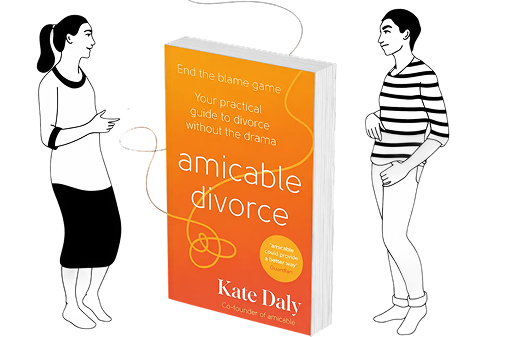
Comments (0)