
Should we get a prenup? An honest guide for couples


Prenups don't have the best PR. They're often associated with celebrity divorces, suspicion and Succession-esque drama. We promise, the reality of prenups is much more practical (albeit much less glamorous).
So maybe you're wondering if you should get a prenup? Here's our jargon-and-judgement-free guide on who prenups are really for and why you might consider getting one.
What a prenup actually is
A prenuptial agreement (or prenup, or premarital agreement) is a document that two people sign before they get married. It sets out what they've agreed should happen with their finances if the marriage were ever to end.
It can cover what each of you brings into the marriage, how you'd handle assets you build up together, what happens to any inheritance, what happens to a business, etc. It can be super simple or meticulously detailed. We can tailor it to the two of you.
For a more detailed desfinition, see our full explanation for what a prenup is.
Myths about prenups
There are many unhelpful assumptions floating around about prenups. Here are a handful of things prenups are not:
- They're not exclusively for the very wealthy. Plenty of people with modest assets benefit from one. So do people with businesses, family money or children from a previous relationship.
- They don't preemptively manifest your divorce. They're a planning document, not a forecast.
- They're not inherently unromantic. Couples who go through the process often say it was the most clarifying conversation they'd ever had together.
- They're not about one person 'winning'. A good prenup is an agreement both people feel comfortable with.
When a prenup is particularly useful
Every couple getting married can benefit from a prenup. It gives both of you clarity about how your finances will work, outlines what each of you wants in writing, and creates shared understanding before you start your life as a married couple.
It can be particularly useful when:
- one or both of you has significant assets going into the marriage (a property, savings, investments)
- one or both of you owns a business
- one or both of you has children from a previous relationship and wants to protect what's intended for them
- one or both of you has expected inheritance, especially from a family business or estate
- there's a meaningful gap in income, savings or earning potential between you
- it's a second (or third) marriage and you've each been through divorce before
- one of you is moving to England and Wales from a country where prenups are standard
Even if none of those apply directly, the conversation a prenup prompts is one of the most useful you can have together before the wedding.
How prenups work in England and Wales
Prenups carry real weight when they've been put together properly. Since a Supreme Court case in 2010 (the Radmacher case), courts have assessed prenups with three key factors in mind:
- Autonomy. Both people entered the agreement freely, without pressure
- Understanding. Both people knew what they were agreeing to
- Fairness. The terms are fair to both, particularly where children are involved
The court always keeps the final say on what's fair if a marriage ends, but a prenup that meets those three principles will heavily influence what 'fair' looks like within the unique context of your relationship. A prenup signed under pressure or with unfair terms is therefore likely to be questioned.
How to start the conversation
Thanks to prenups' slightly sordid reputation, this is often the hardest bit. 'I think we should get a prenup' may not be met with the warmest response, so here are some gentler ways into the conversation:
- Talk about the practical questions first ('have you ever thought about what we'd do if your business took off?', 'what do your parents want to happen with their estate?')
- Frame the prenup as one option, not a given
- Lean on the fact that having to think about it together is part of the point; it's not something you should be considering in isolation of one another
If your partner reacts badly, it's usually because the conversation feels sudden, not because the idea is bad. You can always give them a little more time to ponder on a prenup themselves and come back to it later (although you should not that it's advisable to have your prenup drafted 28 days before the wedding is due to take place).
Where to start
If you're considering a prenup, the most useful thing you can do first is talk about it together. Get the idea on the table, see how each of you feels, and decide whether it's right for you both. From there, the practical steps (disclosure, drafting, signing) feel much simpler to work through.
A prenup, done well, is one of the most romantic things a couple can do together (second, maybe, to planning a wedding). It's about clarity, fairness and starting your marriage with no assumptions unspoken.
That said, if you and/or your partner are unsure on where to begin with having this conversation, then you can absolutely book a free 15-minute consultation in to speak with one of our specialists.

Your guide to a kinder divorce
What if divorce didn’t have to be a battle?
In amicable divorce, Kate Daly offers compassionate, practical guidance to help you separate in a kinder, better way. Whether you’re just beginning, working through the practicalities or adjusting to co-parenting, this book meets you exactly where you are - and helps you move forward with confidence.
Order on Amazon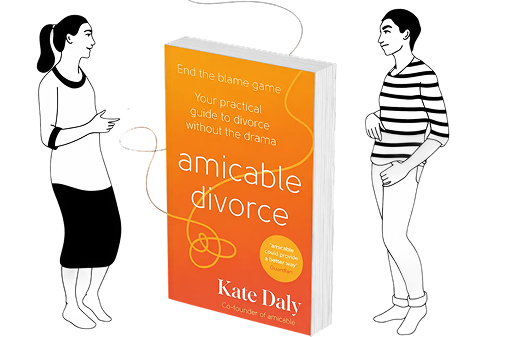
Comments (0)