
How to leave an unsafe relationship


Trigger warning : This article touches on content that some readers might find distressing, such as physical, verbal and financial abuse.
It can be incredibly painful to admit that your relationship is unsafe. After spending so much time and energy on a relationship, realising that it’s no longer healthy can feel like a huge loss. Many people can’t bring themselves to face it, and stay in unhealthy or even dangerous relationships for years.
But ensuring your safety is the most important thing you can do in a relationship, and the first step is to seek professional help to figure out the safest way to leave.
If you’re dealing with abuse of any kind, it’s important for you to know that it is not your fault , and there is no excuse for their behaviour.
It also isn’t your responsibility to stay in a relationship that is harmful to you , no matter what the situation, or if you have children together.
Domestic abuse is unfortunately far more common in family court proceedings than many people realise. Recent research from the Domestic Abuse Commissioner found that 87% of private law children cases involved some form of domestic abuse, sadly making it the 'everyday business' of the family courts rather than an exceptional circumstance.
This article will look at some of the warning signs that you might be in an unsafe relationship, and how you can leave to protect yourself.
We also have a podcast on navigating trauma from unsafe relationships, which you can listen to here:
If you feel that things aren’t right in your relationship, there’s a good chance they aren’t. Every couple argues or has bad days, but if the arguments are escalating to a warning sign below, your relationship might be unsafe.
What is domestic abuse?
Domestic abuse is defined as any single incident or pattern of controlling, coercive, threatening, degrading, or violent behaviour, including sexual violence, by a partner, ex-partner, family member or carer. It can include:
- Physical (hitting, slapping, choking)
- Violent or threatening behaviour
- Verbal abuse (name calling, insults)
- Psychological and emotional abuse (manipulation, gaslighting, humiliation)
- Coercive control (isolating from friends/family, monitoring movements)
- Financial abuse (controlling access to money or employment)
- Sexual abuse
- Digital abuse (monitoring devices, online harassment)
The Domestic Abuse Act 2021 recognises children as victims if they witness abuse and expands the definition to include post-separation abuse.
Signs you might be in an unsafe relationship
Physical abuse
Domestic abuse is sadly all too common. The study we mentioned above found that physical abuse was present in 56% of all domestic abuse case files in the survey. Signs of physical abuse do not need to be visible, such as bruises, bleeding or injuries. It can also be pushing, shoving, hitting, slapping, spitting or choking.
Threatening behaviour is also recognised as domestic abuse – even if your partner doesn’t intend to cause you harm, but threatens that they will, this could potentially put you in a dangerous position later on.
If your partner hurts you, that is physical abuse, and physical abuse of any kind is a crime . Physical abuse is dangerous, and there are organisations that can help you get to safety.
You can contact Refuge’s National Domestic Abuse helpline on 0808 2000 247, or speak to them via livechat here.
You may be entitled to legal aid if you are a victim of domestic abuse and earning below a certain threshold. The GOV.UK website explains where to get help and what situations qualify for legal aid.
You should search for a solicitor who is legal aid registered and they will explain how they can help you access a free divorce.
Verbal abuse
Abuse doesn’t have to be physical. Insults, harsh words and manipulation can erode your confidence over time. Abusers often work to isolate their victim, cutting them off from any outside support who might encourage them to leave, making them more vulnerable to abuse.
Verbal abuse isn’t just insults and name calling, it can also be belittling or dismissive comments.
If you’re being routinely verbally abused, it could be a sign that your relationship is unsafe, and you may be at risk of suffering further kinds of harm.
Money is being controlled, hidden from you or moved without your permission
Not having access to your own money in a relationship is a form of financial abuse. Here are two organisations that can help you with financial and economic abuse:
Surviving Economic Abuse DASH (Domestic Abuse, Stalking and Honour Based Violence) Risk Checklist
If you suspect your ex-partner is hiding or moving assets you will need a solicitor in order to protect yourself from further financial harm, and to recover any money owed to you. You can find a solicitor by using the Resolution database.
How to leave an unsafe relationship
Get help
A good first step if you believe you’re in an unsafe relationship is to call a helpline like the ones we’ve listed above, and explain your situation. You’ll speak to a trained advisor, who can advise you on what steps to take next. Depending on the organisation they may also be able to help you create a strategy to remove yourself from the relationship.
You can contact Refuge’s National Domestic Abuse helpline on 0808 2000 247, or speak to them via livechat here.
DASH (Domestic Abuse, Stalking and Honour Based Violence) Risk Checklist
You may be entitled to legal aid if you are a victim of domestic abuse and earning below a certain threshold. The GOV.UK website explains where to get help and what situations qualify for legal aid.
You should search for a solicitor who is legal aid registered and they will explain how they can help you access a free divorce.
Legal Protections in England and Wales
Clare’s Law is a domestic violence disclosure scheme, allowing individuals to request information about a partner’s history of abuse. The police must disclose relevant information to help people make informed decisions.
Domestic Abuse protection notices (DAPNs) are issued by the police immediately after an incident and Domestic Abuse protection orders (DAPOs) are issued by the court with no time limit, covering all forms of abuse including stalking and coercive control. A breach of a DAPO is a criminal offence.
Victims can make an application to the Family Court for a Non-Molestation Order or an Occupation Order to protect themselves from any contact or proximity to the abuser. An Occupation Order can regulate who lives in the family home if there have been incidents of abuse.
You may be eligible for legal aid if you are a victim of domestic abuse – a solicitor will be able to help you make an application for funding and help you with an application to court.
Begin legal proceedings to end your marriage
Once you’ve decided to end the relationship and have been able to safely leave, consider starting the legal process of divorce.
If you’re married, you’re still linked to your ex-partner in terms of your finances and credit score, which can harm your ability to borrow money and begin the next chapter of your life.
Getting divorced can end all financial obligations between you, and can give you legal protection, as well as increased financial security from the financial settlement.
Build a strong support network
Once you’ve removed yourself from the relationship, it can be beneficial to reach out to friends and family and build a support network that can help you if you need it.
It’s not uncommon for people to leave an unsafe relationship, feel alone or vulnerable, and then return to it. A strong support network will give you other people to reach out to, and to remind you that you don’t need to go back.
If you're going through family court proceedings, having support is particularly important. The court process can last many months or even years, and can be emotionally exhausting.
Consider asking a domestic abuse support worker to accompany you to court hearings – you have the right to have an Independent Domestic Violence Adviser (IDVA) or support worker with you at any hearing.
Special measures are also available to help protect you during court proceedings, including:
- Separate waiting areas at court
- Screens in the courtroom so you don't have to see your ex-partner
- Attending hearings remotely via video link
- Staggered entry and exit times
- Protection from direct cross-examination by your abuser
While these measures can help reduce some of the trauma of court proceedings, research shows they're used in only around half of domestic abuse cases. Make sure you request them clearly on your court forms and speak to court staff about your safety needs.
Abuse of any kind is dangerous, and should be taken seriously. If you believe you’re in danger, call 999.
Read about how to find therapeutic support during a separation, or learn how to rebuild your identity after divorce.

Your guide to a kinder divorce
What if divorce didn’t have to be a battle?
In amicable divorce, Kate Daly offers compassionate, practical guidance to help you separate in a kinder, better way. Whether you’re just beginning, working through the practicalities or adjusting to co-parenting, this book meets you exactly where you are - and helps you move forward with confidence.
Order on Amazon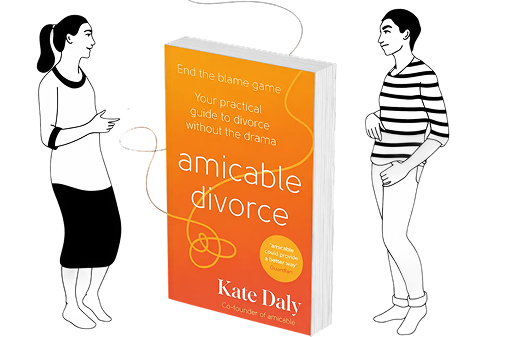
Comments (0)